

How Much Is My Pinball Machine Worth?
The three key factors below determine how much your pinball machine is worth.

Make, model, year, generation and edition can all make a big difference to its value.

Its mechanical condition, appearance and completeness all affect what your pinball machine is worth.

Supply and demand, popularity and recent sale prices determine how much buyers are willing to pay.

Want Us to Take a Look?
Not quite sure what your pinball machine is worth? Send us some details and photos. We’ll be happy to take a look.
What is the value of a pinball machine?
Just about any pinball machine is worth somewhere between €150 and €15,000.
Why such a huge difference?
The value of a pinball machine is much like that of a classic car. The make and model matter, as does the year it was built. Some makes and models are highly sought-after. Others, not so much.
Just as important is its condition. Does it look like it rolled off the production line yesterday? Or has it gone years without maintenance, slowly rotting away in some damp old shed?
And finally, there’s the market for luxury items like pinball machines. Do people have money to spend? Are they feeling financially secure? Or is the economy going through a rough patch? All of this directly affects what your machine can fetch.
The information on this page will help you make a reasonable estimate of your pinball machine’s value.
Which Pinball Machine Do You Have?
The value of your pinball machine starts with one simple question: which machine is it?
Below, we’ll show you how to identify your pinball machine and explain how its different characteristics affect its value.
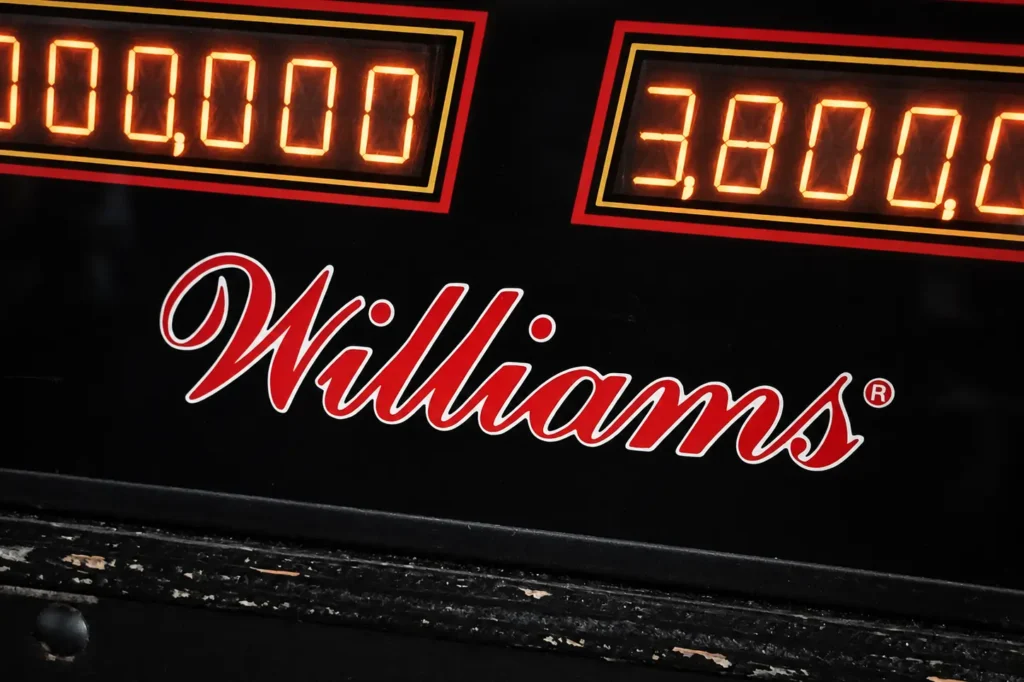
You’ll usually find the manufacturer’s name on the backglass and/or playfield, often in small lettering.
On machines with digital displays, the brand name may also appear on the display itself.
The Manufacturer
Just like cars and soft drinks, the pinball world has its premium brands and its less prestigious ones. There’s just one catch: which manufacturer comes out on top depends on the era.
A machine’s manufacturer is a useful first indication of its value, particularly when comparing machines from the same period. Take electromechanical pinball machines from the 1950s to the mid-1970s. Back then, Gottlieb was the premium brand.
But that doesn’t automatically make every Gottlieb from that period more valuable than its competitors. Bally’s Fireball from 1972 is a great example. This hugely popular, high-quality classic proves that a strong title can easily outweigh a manufacturer’s reputation.
After Williams took over Bally in 1988, the two brands dominated the market for the rest of the millennium. Compare a Bally/Williams machine with a Gottlieb/Premier or Data East/Sega from roughly the same year and in similar condition, and the Bally/Williams will usually be worth more.
With modern machines from Stern, Jersey Jack and Spooky, the manufacturer matters less. The title and edition generally have a much bigger influence on the price.
Title and Theme
Two Bally pinball machines from 1979 can look remarkably similar on paper. Take Kiss and Supersonic: same manufacturer, same generation and more similarities than differences when it comes to gameplay.
Yet a Kiss pinball machine is worth several times as much as a Supersonic. Why? One features a band that still has a massive fanbase today. The other features Concorde: an aircraft that was way ahead of its time, but doesn’t attract quite the same attention these days.
Of course, a pinball machine doesn’t need a famous licence to become valuable. Machines like Gottlieb’s Black Hole and Williams’ Medieval Madness earned their legendary status through gameplay, design and sheer presence.
So a title can be valuable for different reasons: its theme, its reputation as a game or a combination of both. That’s why two machines from the same manufacturer and generation can have very different values.
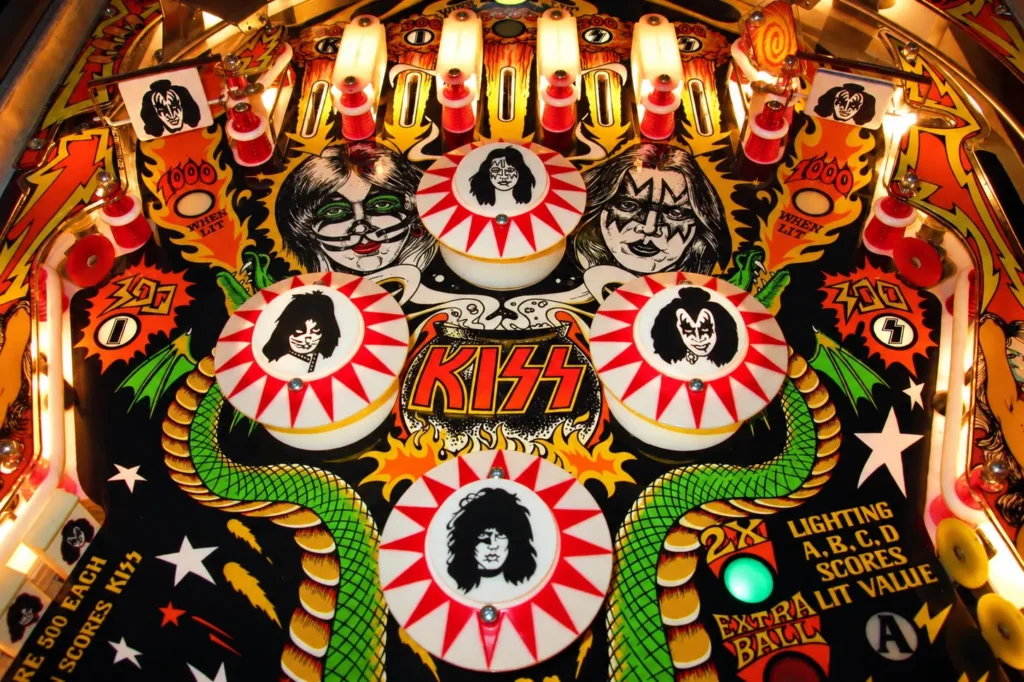
The title is almost always prominently displayed on the backglass. You’ll sometimes find it on the playfield and/or the sides of the cabinet, too.
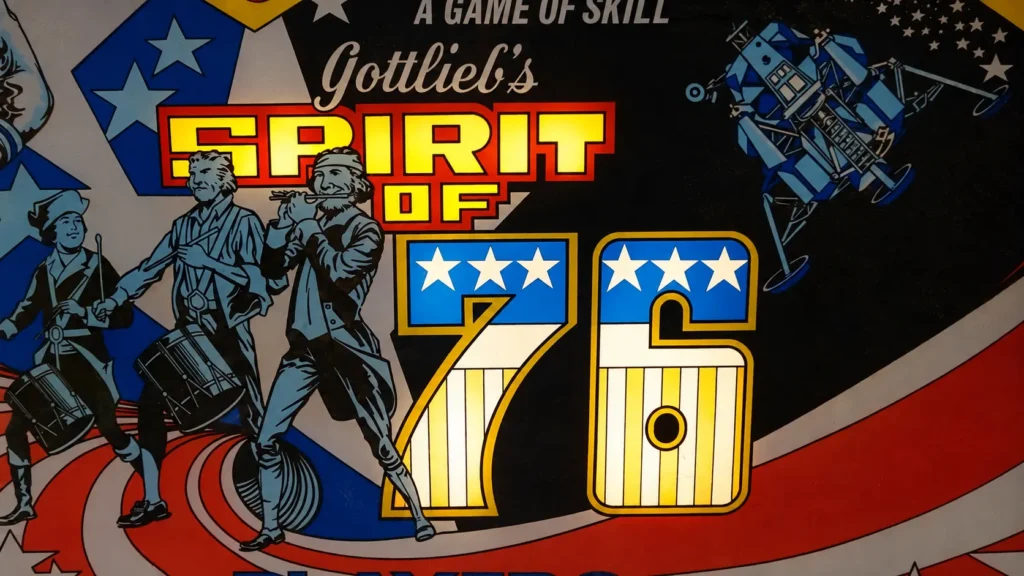
Want to find out when your pinball machine was made? Enter its title in the International Pinball Database.
Year of Manufacture
A pinball machine from 1976 and one from 2026 have just one thing in common: a steel ball rolling around a playfield. Pinball has come a long way. From simple electromechanical games to machines packed with multiballs, modes, video screens and moving mechanisms.
And that evolution is reflected in their value. Newer machines are often worth more than older ones. But certainly not always. Some titles have built such an outstanding reputation that their age barely matters.
There’s another factor: not every era was equally successful. The pinball industry went through some very difficult periods. Sales dropped, manufacturers had to cut costs and designs became less ambitious. The years between 2000 and 2010 are a good example.
Sometimes this applies to individual manufacturers, too. Between 1983 and 1988, Bally/Midway produced a generation of machines that wasn’t particularly well received. These games never became as popular as those that came before or after.
Edition or Version
Some pinball machines were released in several official versions. This was already happening in the 1980s and has become standard practice among modern manufacturers. Which version you own can make a considerable difference to its value.
Modern Stern pinball machines are often available in three editions:
- Pro is the standard version.
- Premium adds extra mechanisms and gameplay features.
- Limited Edition usually offers the same gameplay as the Premium, but comes in limited numbers with additional luxury finishes.
And then there are prototypes of regular production machines. These can differ from the final version, sometimes featuring extra or missing components or different artwork. Collectors may find these particularly interesting. But not always.
Because here’s the thing: Limited Edition or Prototype doesn’t automatically mean jackpot. Eight Ball Deluxe, for instance, was released in both a regular and a Limited Edition version. Yet it’s the regular version that’s more popular. With other titles, it’s exactly the opposite. The rare Special Collectors Edition of The Addams Family is more desirable than the standard machine.
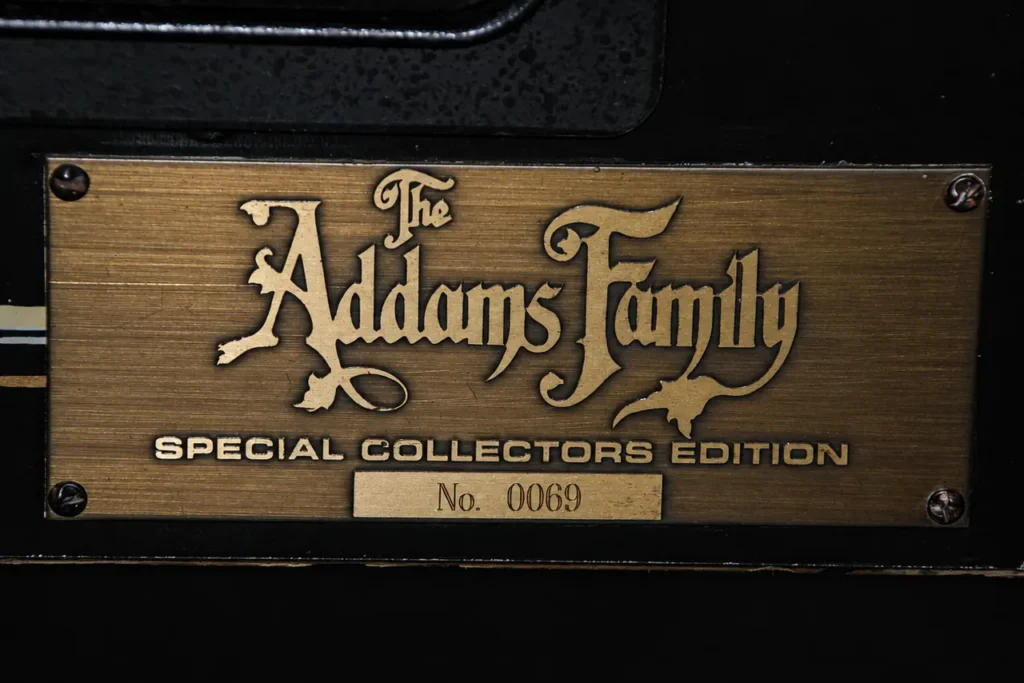
Your pinball machine’s serial number may reveal whether it’s a prototype. You can register it with the International Pinball Serial Number Database.
Still Not Sure?
Feel free to WhatsApp us some photos of your pinball machine. Or fill in the form. We’ll be happy to help you identify it.
What Condition Is Your Pinball Machine In?
Two pinball machines with the same brand and title can have very different values. Simply because one has been carefully maintained for years, while the other has mostly been gathering dust.
There are two main things to look at: mechanical condition and cosmetic condition. But maintenance, previous repairs, originality and missing parts can all make a considerable difference, too.
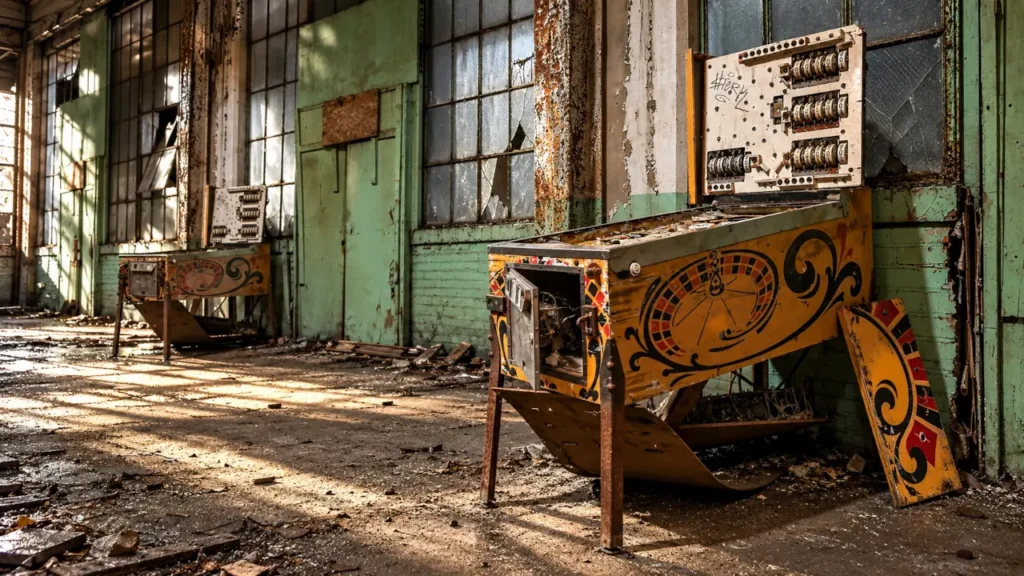
Is your pinball machine broken and in need of repair? Always take it to an experienced pinball technician.
Skip your handy neighbour who happens to know which end of a soldering iron gets hot. Pinball electronics can be extremely sensitive.
Mechanical Condition
Just because a pinball machine works doesn’t mean it’s mechanically sound. That’s probably one of the biggest misconceptions about old pinball machines. The machine powers up, the lights come on and a ball starts rolling. Great! But that tells you surprisingly little about its actual condition.
What to look for depends on the generation. With electromechanical machines, dirty or poorly adjusted switch contacts are common problems. With solid-state machines, you may encounter worn connectors, ageing capacitors, faulty displays and circuit board problems, often caused by leaking batteries.
Flippers, mechanisms, switches, lights and other moving parts: after all these years, they all need maintenance, replacement or at the very least a thorough clean.
A second-hand pinball machine is only genuinely in 100% working order when all these things have been taken care of. And that can take a lot of money. Not to mention an enormous amount of time. That’s why mechanical condition has such a direct impact on value.
Cosmetic Condition
You can clean off dirt. Damage is another matter.
That’s why, when assessing value, you should pay particular attention to things that are difficult to restore.
- Is the playfield still in good condition, or does it show signs of wear?
- Does the backglass still look good, or is the paint starting to flake?
- Is the cabinet solid and does it still have its original paintwork? Or is it badly damaged, perhaps even repainted?
Playfield components matter, too. Are the plastics, ramps and metal parts all complete and in good condition?
How the playfield was protected over the years is another important factor. Does it have a protective Mylar film? A clearcoat? Or no protection at all? After several decades, that can make an enormous difference.
A filthy pinball machine with a beautiful playfield can be a very interesting project. A sparkling clean machine with severe playfield wear is still a machine with severe playfield wear.

Be careful which products you use when cleaning a pinball machine.
Avoid harsh or abrasive cleaners. And never just start cleaning the playfield with a water-based product.
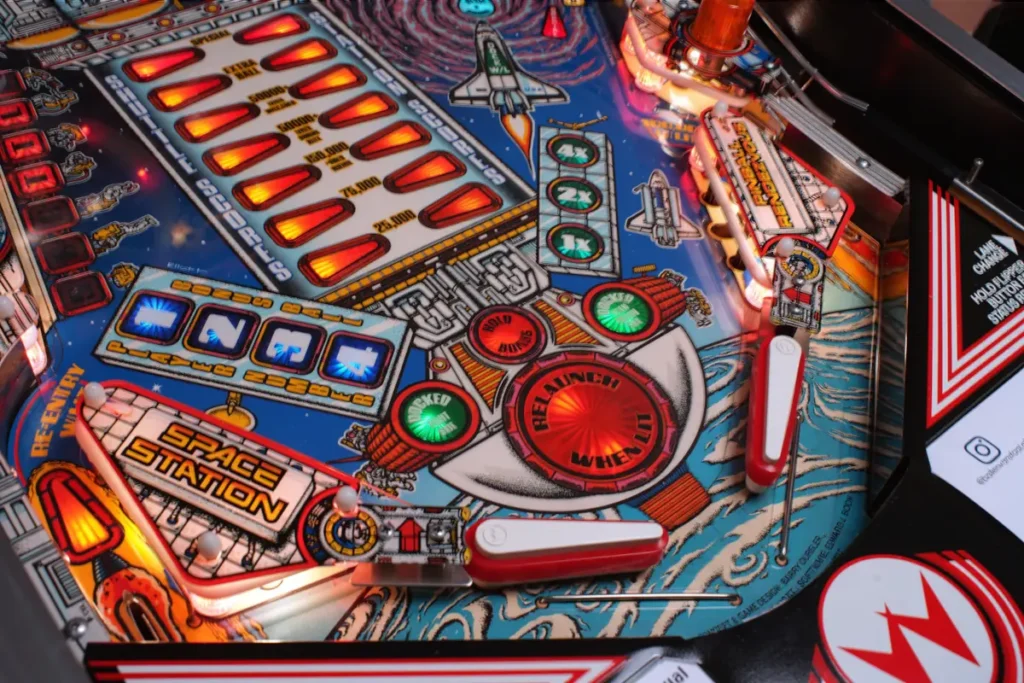
Has your pinball machine been serviced or restored? Make a list of exactly what’s been done.
That gives vague terms like serviced, refurbished and restored some real meaning. Buyers know what to expect, and you’re more likely to receive a realistic offer.
Serviced, Refurbished or Restored?
Again: think of a pinball machine as a car. A car gets regular servicing from a professional mechanic. Otherwise, it eventually breaks down and might even leave you stranded on the motorway.
Pinball machines need maintenance, too. The difference? A broken pinball machine won’t leave you shivering on the hard shoulder. And finding a specialist to repair one isn’t always easy. The result? Plenty of pinball machines go years without proper maintenance.
But words like serviced, refurbished and restored don’t tell the whole story. To one technician, a restoration might mean replacing a few rubbers and giving the machine a quick clean. To another, it means removing virtually every component from the playfield, cleaning and checking everything, then repairing or replacing parts where necessary.
Bottom line: a properly working pinball machine is worth more than a broken or unreliable one. There are simply more potential buyers for a machine that’s ready to play than for a restoration project.
Complete, Original and Repairable
A broken part is mostly a problem when it’s difficult to replace.
A worn rubber that costs a couple of euros? No drama. A burnt-out bulb? Easily sorted. But a missing one-of-a-kind plastic, a shattered ramp or a backglass with no replacement available anywhere? That’s a different story.
So when it comes to value, it’s not just about what’s broken or missing. You also need to ask:
- Is the part still available?
- Does a good reproduction exist?
- If not, can you find a second-hand replacement?
- And most importantly, how much will all this cost?
Originality matters, but original isn’t automatically better. A beautiful reproduction playfield with a good clearcoat may be worth more than a badly worn original.
The opposite can be true, too. An exceptionally well-preserved, untouched machine with very little play can be highly desirable.
But just because something is untouched doesn’t mean it’s been well looked after.

Not sure which parts of your machine are original? Fair enough. Not everyone is a pinball expert.
If you’re selling your machine, take plenty of good photos. That way, potential buyers can judge its condition for themselves.
Still Not Sure?
Feel free to WhatsApp us some photos of your pinball machine. Or fill in the form. We’ll see if we can help you assess its condition more accurately.
What's Happening in the Pinball Market?
Even if you know exactly which pinball machine you have and what condition it’s in, its value isn’t set in stone. The market keeps moving.
What buyers are willing to pay depends on the market at that particular moment. But also on the prices you’re comparing, how quickly you want to sell and even where your machine is located.
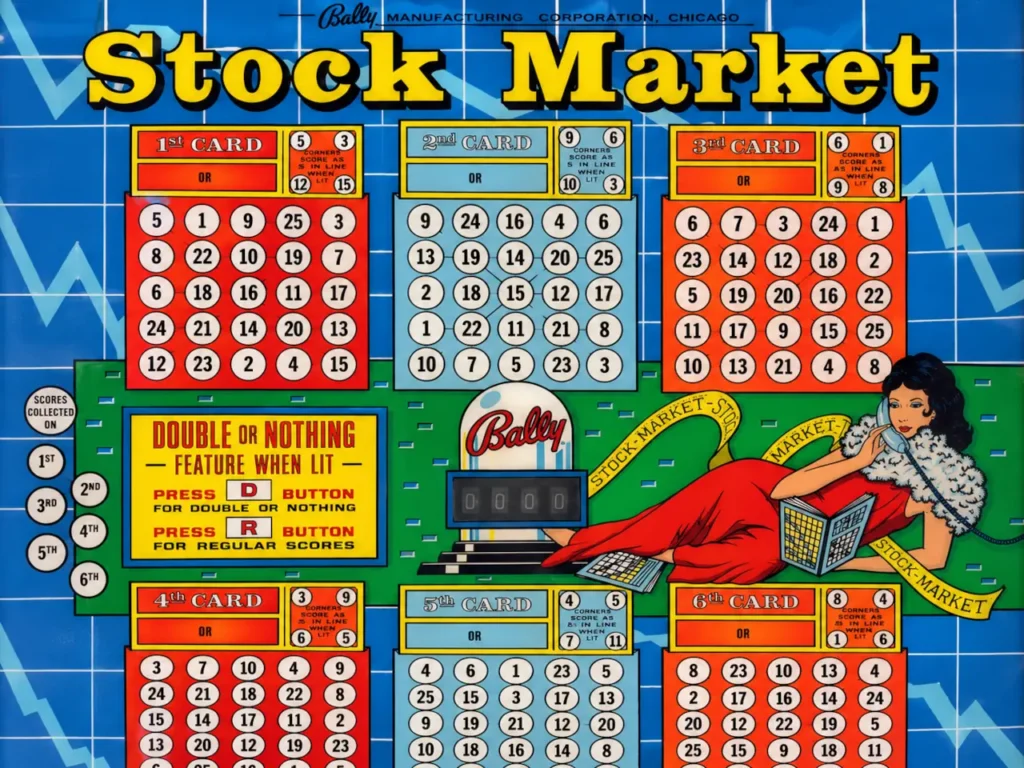
Even the time of year can affect how much you get for your pinball machine.
Mid-July, 30 degrees celcius, not a cloud in the sky? Buying a pinball machine probably isn’t at the top of everyone’s list. Besides, half the country is away on holiday.
What's the Pinball Market Like Right Now?
The value of a pinball machine isn’t determined by the machine alone. The market around it changes, too.
- Are people willing to spend money on expensive hobbies?
- Is pinball particularly popular at the moment?
- Have certain titles suddenly become more desirable?
All these things can affect what buyers are willing to pay.
The COVID pandemic is a great example. People spent much more time at home and invested heavily in their houses, games rooms and man caves. Demand for pinball machines shot up, and prices followed.
But markets can cool down again. Economic uncertainty, less disposable income or changing tastes can all make buyers more cautious.
So don’t just look at what your machine was worth a few years ago. Yesterday’s market isn’t necessarily today’s market.
Ultimately, your pinball machine is worth what someone is willing to pay for it today.
Asking Price Isn't Selling Price
You search for your pinball machine online and find someone selling the exact same model for €2,000. Brilliant! That means yours must be worth about €2,000 too… right?
If only it were that simple.
An asking price tells you what the seller hopes to get. Not what someone is actually willing to pay. A machine might sit unsold at €2,000 for months, only to sell for €1,200. Or not sell at all.
Actual selling prices are much more useful when estimating market value. They show that a buyer and seller genuinely agreed on a price.
Unfortunately, those figures can be difficult to track down. An advert might disappear without you ever knowing whether the machine sold. And if it did, for how much.
So never base your estimate on a single advert, but:
- Compare several machines of the same title currently for sale.
- Check how long they’ve been advertised.
- Try to find out what people actually paid for comparable machines.
An asking price tells you what someone wants. A selling price tells you what the market was prepared to pay.

Visible offers on an advert can be interesting. They may give you an idea of what people are prepared to pay, especially when several buyers start bidding against each other.
But offers don’t always reflect real value. Until the money’s actually in your hand, you don’t know what that offer was worth.

Try to keep your head cool, even if you’re keen to sell your machine quickly. You’ll make better decisions when you’re not rushing.
How Quickly Do You Want to Sell?
Got all the time in the world to sell your pinball machine? Then you can sit back and wait for someone who’s looking for exactly your title and is happy to pay a good price.
Need it gone quickly? That’s a different story. The less time you allow yourself to sell, the fewer potential buyers will get the chance to see your machine.
Want to close a deal within a few days or weeks? Then your price needs to appeal to the buyers who happen to be looking right now. In no rush? You can aim a little higher and see what happens.
But be careful: patience doesn’t automatically make your machine more valuable. If your asking price is consistently too high, you could spend months waiting for nothing.
More time simply gives you a better chance of finding the right buyer. It doesn’t automatically entitle you to a higher price.
Where Is Your Pinball Machine Located?
A pinball machine won’t fit in a parcel locker. It’s big, heavy and fragile. So its location can make a real difference to how easily you can sell it.
Is your machine somewhere with plenty of potential buyers nearby, or somewhere that’s relatively easy to reach? Great. That’s one less obstacle.
But what if it’s in a more remote part of the world, on an island or up four flights of stairs with no elevator? A buyer will need to factor in extra travelling time, effort and transport costs.
That doesn’t mean a pinball machine in Buttfuck AZ is automatically worth less than the exact same machine in Amsterdam. Enthusiasts will happily travel halfway across the country for something special.
But when two comparable machines are available, accessibility can make the difference. The more time, money and effort it takes to get your machine home, the more likely a buyer is to factor those costs into their offer.
So location doesn’t determine the value of your machine. But it can certainly influence the final selling price.
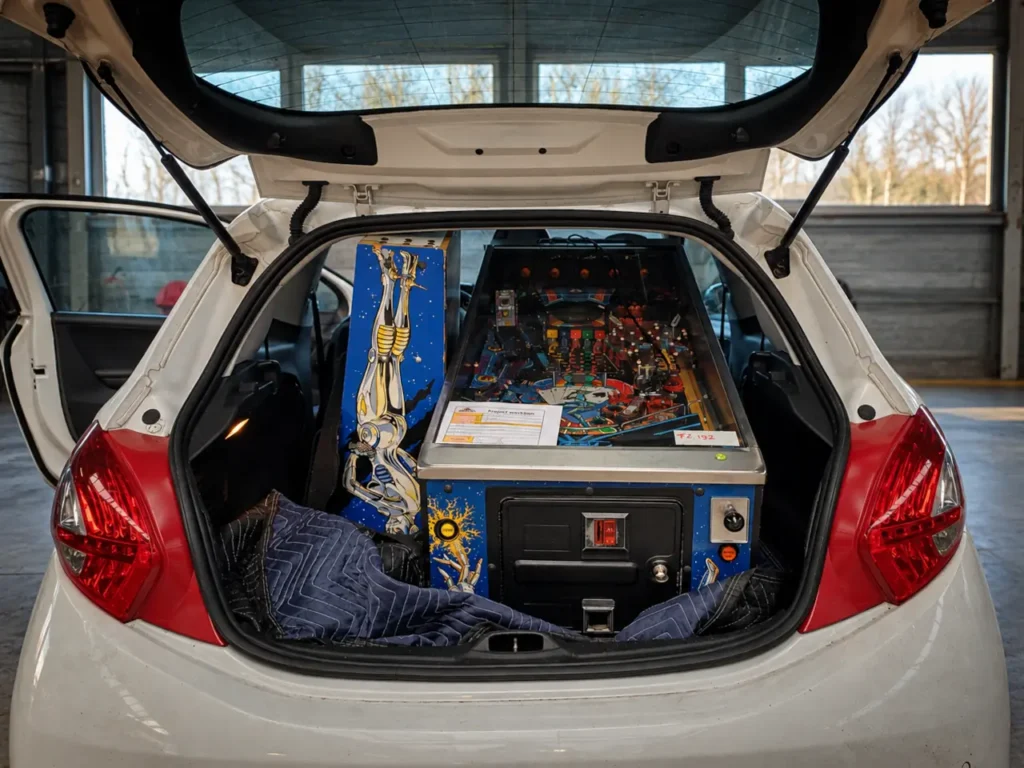
Is your pinball machine tucked away somewhere difficult to reach, perhaps at the back of your garage behind a mountain of moving boxes?
Ask the buyer if they wouldn’t mind giving you a hand. Most people are happy to help.
Still Not Sure?
Got questions about the current pinball market? Feel free to drop us a WhatsApp message or fill in the form. You can also ask us what we’d be willing to pay for your machine.
Pinball Machine Values: Your Questions Answered
Below, we answer your questions about pinball machine values.
The prices mentioned are based on complete, good-looking machines that work properly, have been well maintained and are free from faults.
Treat these figures as a guide, not a formal valuation or a guaranteed selling price. The title, edition and current market can push values considerably higher or lower. Damage, missing parts and neglected maintenance will obviously affect the price, too.
Can’t find your question? Ask us here and we’ll get back to you as soon as we can.
Need a Hand?
Whatsapp us your question, or use the form at the bottom of this page. We’ll get back to you as soon as we can.
How Much Is an Electromechanical Pinball Machine Worth (Up to Around 1977)?
A complete, tidy and fully working electromechanical pinball machine is generally worth around €500 to €1,500. You can recognise electromechanical, or EM, pinball machines by their mechanical score reels.
Gottlieb was the premium manufacturer back then. Popular Bally titles like Fireball and Wizard are also highly sought-after. An exceptionally nice example of a popular title can easily exceed this price range.
The market for these older machines is smaller than for later generations. The people who grew up playing them are getting older, while modern machines attract a wider audience.
How Much Is a Pinball Machine from the 1980s Worth?
A tidy, fully working pinball machine from the 1980s is generally worth around €1,000 to €3,500. You can recognise this generation by its digital score displays, which now have a wonderfully retro feel.
Values vary enormously within this decade. Compare a machine from 1980 with one from 1989 and you’ll see just how much changed. Ramps, multiball, speech and music all made their appearance.
In the early 1980s, Bally, Williams, Stern and Gottlieb produced some excellent titles. Then the industry went through a major crisis. From the middle of the decade onwards, Williams in particular made a strong comeback.
The title and manufacturer can push prices well outside the usual range. A rare gem like Banzai Run is worth considerably more. Machines from less common manufacturers such as Playmatic are often worth less, partly because of temperamental electronics and hard-to-find spare parts.

How Much Is a Pinball Machine from the 1990s Worth?
A complete, tidy and fully working pinball machine from the 1990s is generally worth around €2,000 to €6,000. Most machines from this generation use the familiar dot matrix display (DMD) to show scores and animations.
Bally/Williams machines from this period are particularly desirable. The 1990s brought increasingly elaborate rules, spectacular toys and strong licensed themes. Titles like Fish Tales, Indiana Jones and Twilight Zone are still hugely popular today.
The very best machines regularly exceed the usual price range. Medieval Madness and Monster Bash, for example, can command prices well above the figures mentioned here.
There’s a large market for good 1990s pinball machines. For many enthusiasts, this was the golden age of pinball.
How Much Is a Pinball Machine from 2000–2010 Worth?
A tidy, fully working pinball machine from 2000–2010 is generally worth around €2,000 to €5,500. Almost every machine from this period was made by Stern, which had become the industry’s only remaining major manufacturer by 2000.
These were difficult years for pinball. Both the commercial arcade market and the market for private buyers were small. Machines from this period often had fewer features than their 1990s predecessors. Development had slowed and the technology was showing its age. Gradually, stronger titles appeared, including The Simpsons Pinball Party, The Lord of the Rings and Spider-Man. Games that could finally match the fun of their 1990s predecessors.
Those standout titles are now the exceptions. The Lord of the Rings and The Simpsons Pinball Party in particular can exceed the normal price range. Less popular early Stern machines tend to be considerably cheaper.

How Much Is a Modern Pinball Machine Worth (2010 Onwards)?
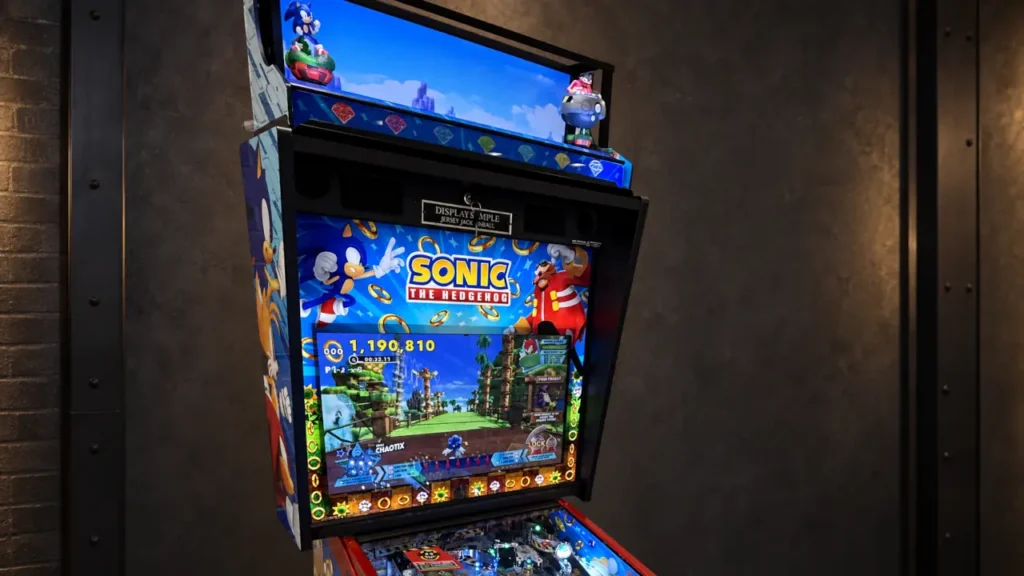
A tidy, fully working pinball machine from 2010 onwards is generally worth around €5,000 to €12,000. From 2011, Stern once again faced competition, including Jersey Jack Pinball, followed by several new manufacturers.
Values vary considerably between titles and editions. Pro, Premium and Limited Edition versions can differ by thousands of euros, while popular themes like Godzilla, Jurassic Park and Harry Potter attract plenty of collectors.
The modern pinball market is lively. Desirable Premium and Limited Editions can exceed the usual price range, while less popular titles and editions may fall below it.
How Much Is a Williams Pinball Machine Worth?
A complete, attractive and well-maintained Williams pinball machine is generally worth around €500 to €9,000. The year of manufacture and title make a big difference.
Electromechanical Williams machines from the 1970s are generally worth less than comparable Gottlieb machines or the more desirable Bally titles.
During the 1980s and 1990s, however, Williams produced some extremely popular and valuable classics. Among the most valuable Williams pinball machines are Banzai Run (1988), Medieval Madness (1997) and Monster Bash (1998).
How Much Is a Bally Pinball Machine Worth?
A complete, attractive and well-maintained Bally pinball machine is generally worth around €500 to €9,000. The year of manufacture and title make a big difference.
The 1970s brought us sought-after titles like Fireball, Captain Fantastic, Wizard! and Kiss.
1981 was another fantastic year, with Centaur, Eight Ball Deluxe and Fathom. A few less successful years followed, but quality and popularity improved again after Williams took over in 1988.
Some of the most valuable Bally pinball machines include Scared Stiff, Cirqus Voltaire and Cactus Canyon.
How Much Is a Gottlieb Pinball Machine Worth?
A complete, attractive and well-maintained Gottlieb pinball machine is generally worth around €500 to €4,500. The year of manufacture and title make a big difference.
During the electromechanical era, up to around 1977, Gottlieb was widely regarded as the premium pinball manufacturer. Today, however, those machines are generally worth little more than comparable models from other brands. That’s largely because interest in electromechanical pinball machines has declined.
From the late 1970s and well into the 1980s, Gottlieb developed a poor reputation for unreliable electronics, particularly in its early solid-state machines. Even so, the company produced several desirable and valuable titles during this period, including Black Hole, Spirit, Haunted House and TX-Sector.
Gottlieb machines from the 1990s, produced by Premier, are very reliable. But most can’t quite match the gameplay offered by Bally and Williams. And that’s reflected in their market value.
How Much Is a Data East Pinball Machine Worth?
A complete, attractive and well-maintained Data East pinball machine is generally worth around €1,000 to €4,000. With this manufacturer, the title makes a particularly big difference.
Data East started producing pinball machines in 1987 and was taken over by Sega in late 1994. After experimenting with a few original themes, the company increasingly focused on popular films and television series.
Its machines were often less sophisticated in terms of software, sound and gameplay. That tends to be reflected in their second-hand value.
But familiar themes are a major advantage. The Simpsons, Jurassic Park, Phantom of the Opera and Star Wars still capture people’s imaginations, keeping these machines desirable.
How Much Is a Sega Pinball Machine Worth?
A complete, attractive and well-maintained Sega pinball machine is generally worth around €1,500 to €4,000.
Sega took over Data East’s pinball division in 1994. Their machines often looked spectacular, but the sound quality, components and software sometimes left a lot to be desired. The gameplay itself could feel less refined, too. That’s reflected in their popularity and second-hand value.
Generally speaking, Sega titles aren’t particularly sought-after. But well-known themes like South Park still appeal to plenty of enthusiasts.
How Much Is a Stern Pinball Machine Worth?
A complete, attractive and well-maintained Stern pinball machine is generally worth around €700 to €12,000. The year of manufacture, title and edition make a big difference.
Pinball machines were produced under the Stern name during two very different periods:
Stern Electronics (1977–1982) produced relatively small numbers, including some surprisingly enjoyable and occasionally valuable titles like Star Gazer, Quicksilver and Orbitor 1.
In 1999, Gary Stern acquired Sega’s pinball division, bringing Stern Pinball back into production. The earliest machines were often relatively basic and offered little in the way of technical innovation. But titles like The Simpsons Pinball Party and The Lord of the Rings soon proved that Stern could still produce valuable classics. From around 2010 onwards, the games became increasingly elaborate and sophisticated.
Today, Stern produces highly desirable machines based on themes including Marvel, rock bands and Pokémon, often in several editions. Thanks to their popularity, modern gameplay and relatively young age, many of these machines hold considerable value.
And yes, you can still buy a brand-new Stern pinball machine!
How Much Is a Broken Pinball Machine Worth?
There’s no fixed answer to that one.
Even a broken pinball machine can still be worth hundreds or thousands of euros. It mainly depends on which machine it is, what’s wrong with it and how difficult or expensive the repairs will be.
Repairing a pinball machine can also require many hours of specialist labour. So you’re not just paying for spare parts. And if the machine won’t even power up, a buyer has no way of knowing what other problems might be lurking inside.
The market for broken machines is much smaller, too. A working pinball machine is fantastic. A broken one can quickly become a very large obstacle in your living room.
Got one of those? Send us some info or photos. We’ll be happy to take a look. Who knows? We might even be interested ourselves.


Will My Pinball Machine Be Worth More if I have it Repaired or Restored?
Often, yes. Especially if you can get a broken machine working again. But be careful. If you don’t know what you’re doing, don’t start tinkering. And be wary of those ‘handy neighbours’, too. A botched repair can actually make a pinball machine less valuable.
There’s also a big difference between a machine that works and one that works reliably. A pinball machine that plays one perfect game might still have dodgy connections, sticking mechanisms or other faults. Tracking down, fixing and preventing these problems can take an enormous amount of time on older machines.
A full restoration isn’t always a smart financial decision. You’re not just investing money and hours in the electronics and mechanics, but also in appearance and finishing. That can make a machine much more attractive. But its market value won’t necessarily increase by the amount you’ve spent. Especially with less desirable titles, it’s perfectly possible to spend thousands of euros on a restoration without ever seeing that money again.
Still Not Sure?
Got questions about the value of your pinball machine? Feel free to WhatsApp us or fill in the form. You can also ask us what we’d be willing to pay for your machine.
Want Us to Take a Look?
Not quite sure what your pinball machine is worth? Fill in this form and we’ll be happy to take a look.
