9 Terrible Movies with Surprisingly Awesome Pinball Machines
Sometimes I watch a movie and think: “Why on earth isn’t there a pinball machine based on this?” But sadly, I also find myself thinking the exact opposite: “Who thought it was a good idea to turn this trash into a pinball game?” That question fascinates me. Hence: this article.
Nine cinematic disasters. One thing they all have in common? Every one of these bad Hollywood movies spawned a pinball machine. And not just any machine: a surprisingly good one. With a better storyline. Better effects. And just a much better experience overall. From rubber gorillas to batwings with neon glow: these are the worst movies with the best pinball machines.

Index
1. Congo (1995)
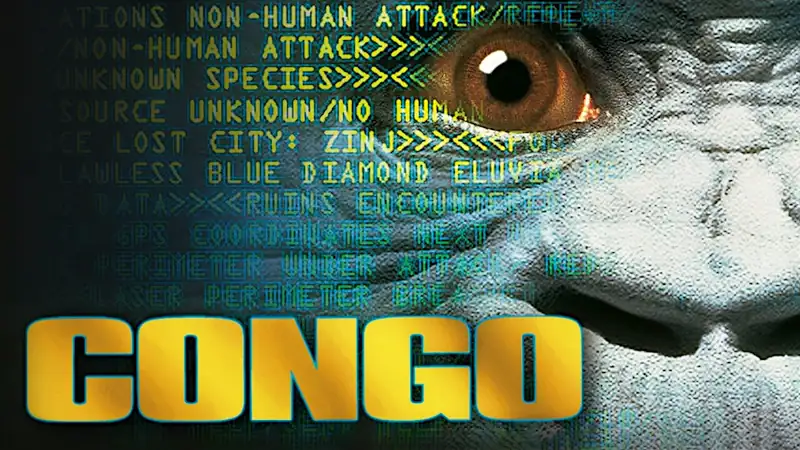
Congo - the movie: when the gorilla out-acts the actors
When Michael Crichton wrote the novel Congo, many considered it unfilmable. But Hollywood gave it a shot anyway, riding the massive wave of Jurassic Park’s success.
Where Spielberg brought dinosaurs to life with jaw-dropping realism, Congo gave us… a rubber gorilla with a speech translator. The movie is a chaotic mix of jungle clichés, wonky tech, and over-the-top supporting roles. The low point? Tim Curry’s hyperactive “Romanian” accent, coming from an actor who’s brilliant in just about everything else.
Amy, the talking gorilla, was supposed to be heartwarming. She ended up unintentionally hilarious. Add a script full of clunky dialogue and hollow plot twists, and it’s no surprise the film landed squarely in cult territory. Critics called it “an adventure with no suspense” and “camp without charm.”
Congo - the pinball machine (Williams, 1995)
Where the movie fails, the pinball machine absolutely delivers. Congo is a cheerful surprise in the Williams line-up: fun, approachable, and full of atmosphere.
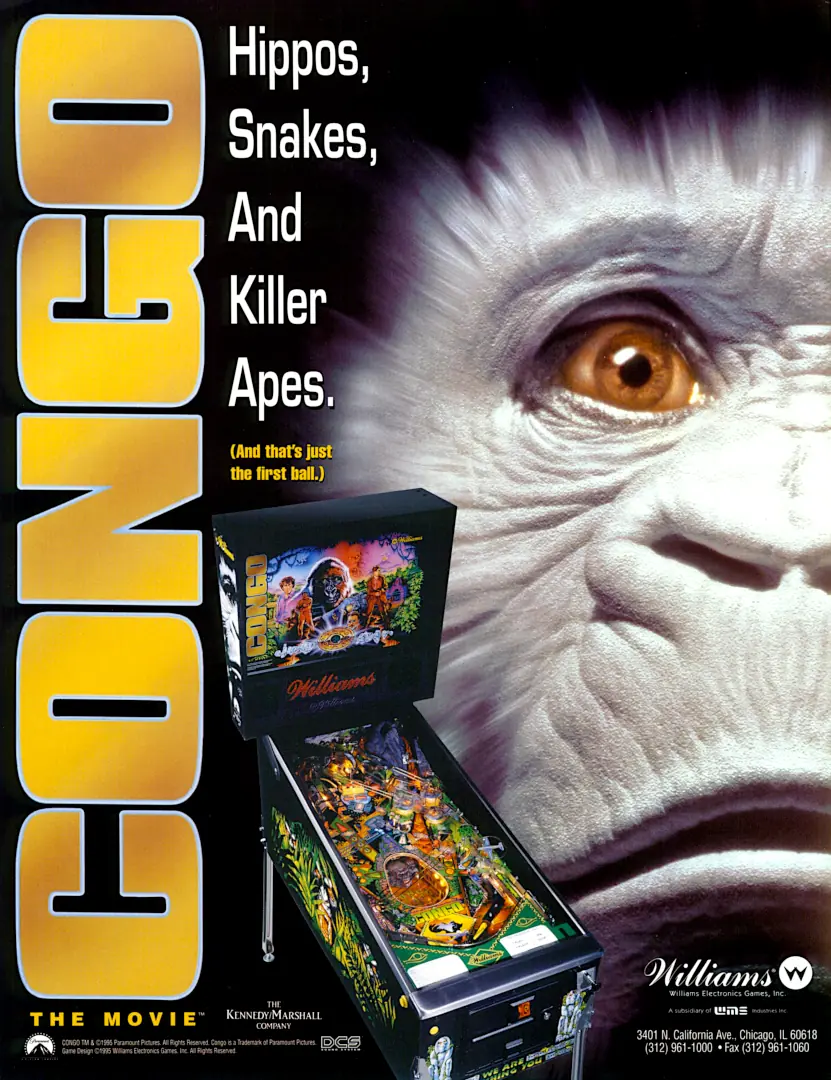
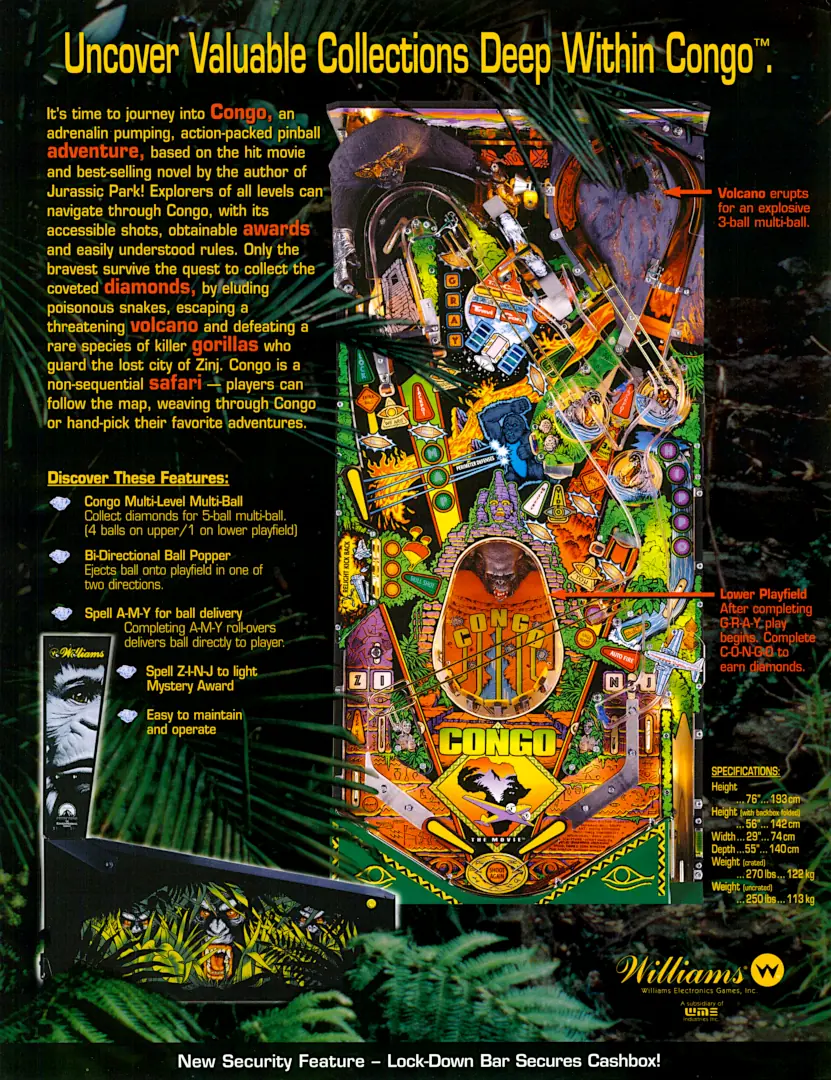
The jungle setting runs through everything: from music and soundbites to the playfield layout. That clean shot up the volcano, through the bumpers, is one of the most satisfying in all of pinball.
Play Congo, and you’ll feel like you’ve stepped into a real jungle adventure. Watch out for snakes, hippos, and primates. Your mission: find the world’s most valuable diamonds.
Congo might be a bit easy for seasoned players, but that’s part of its charm. It’s instantly understandable, begs for just one more game, and never punishes casual players.
The flow is smooth, the goals are clear, and it rewards you at just the right moments with little surprises. A machine you’ll be happy to park in your living room jungle.
2. Last Action Hero (1993)
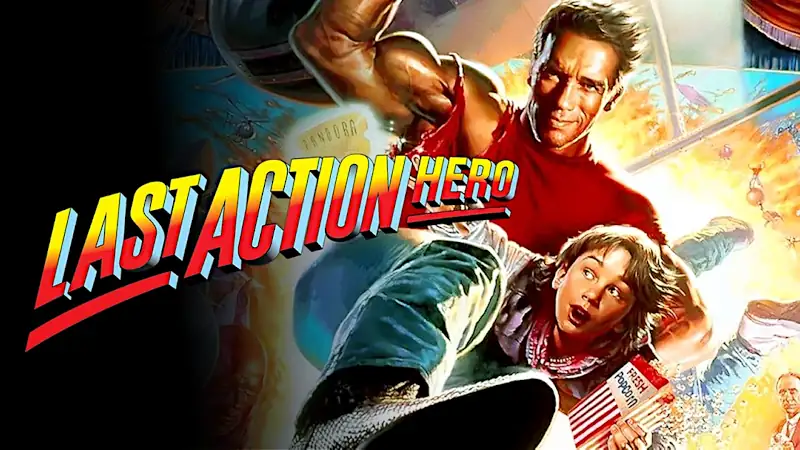
Last Action Hero - the movie: one of Arnie’s lesser vehicles
When I saw this in the cinema as a kid, I had the time of my life. And to be fair: there are some fun ideas in here. The Terminator 2 poster with Sly Stallone is brilliant, and Robert Patrick’s cameo as the T-1000 is pretty awesome.
But let’s be honest: Last Action Hero is kind of a mess. The film blends action, satire and fantasy, and more often than not, it just doesn’t work. The tone swings wildly and often feels way too childish. Arnie usually brings the fun, but this is clearly one of his weaker outings.
Last Action Hero – the pinball machine (Data East, 1993)
If we were making a reverse list (great movies with terrible pinball machines) Data East would easily dominate. They gave us Star Wars, Hook, and Back to the Future with gameplay that ranged from clunky to downright painful.
But credit where it’s due: Last Action Hero is a genuinely fun machine.
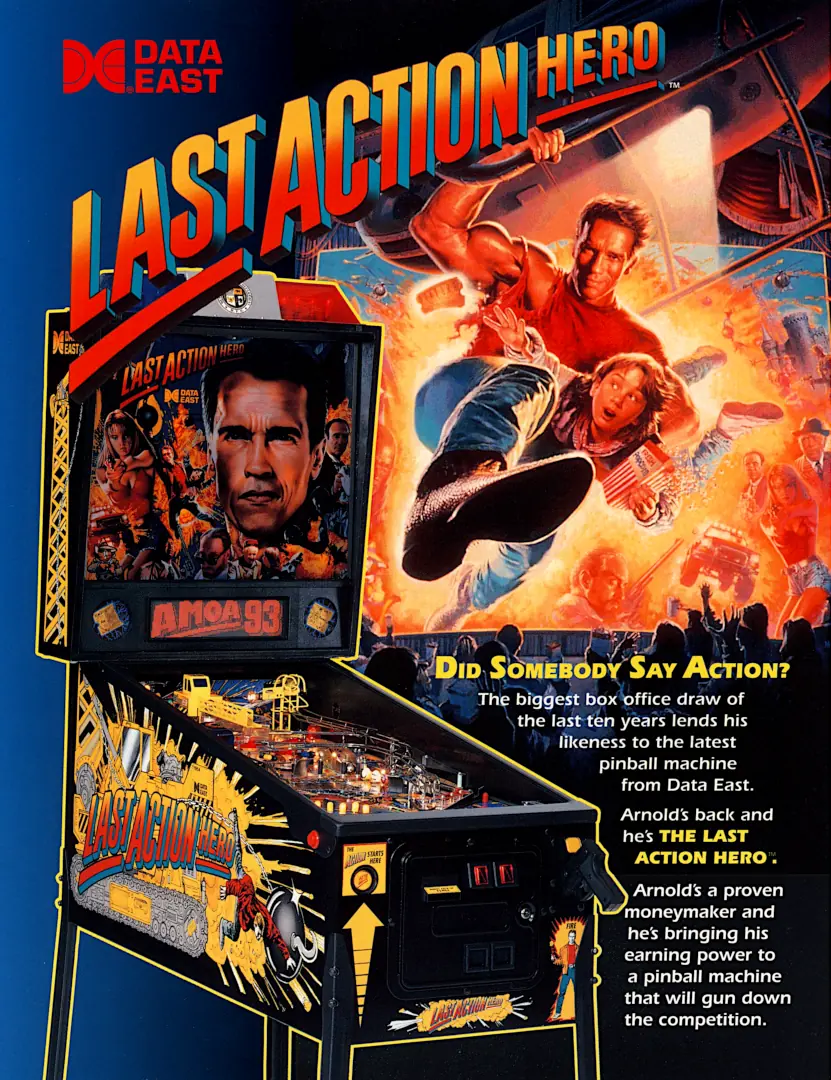
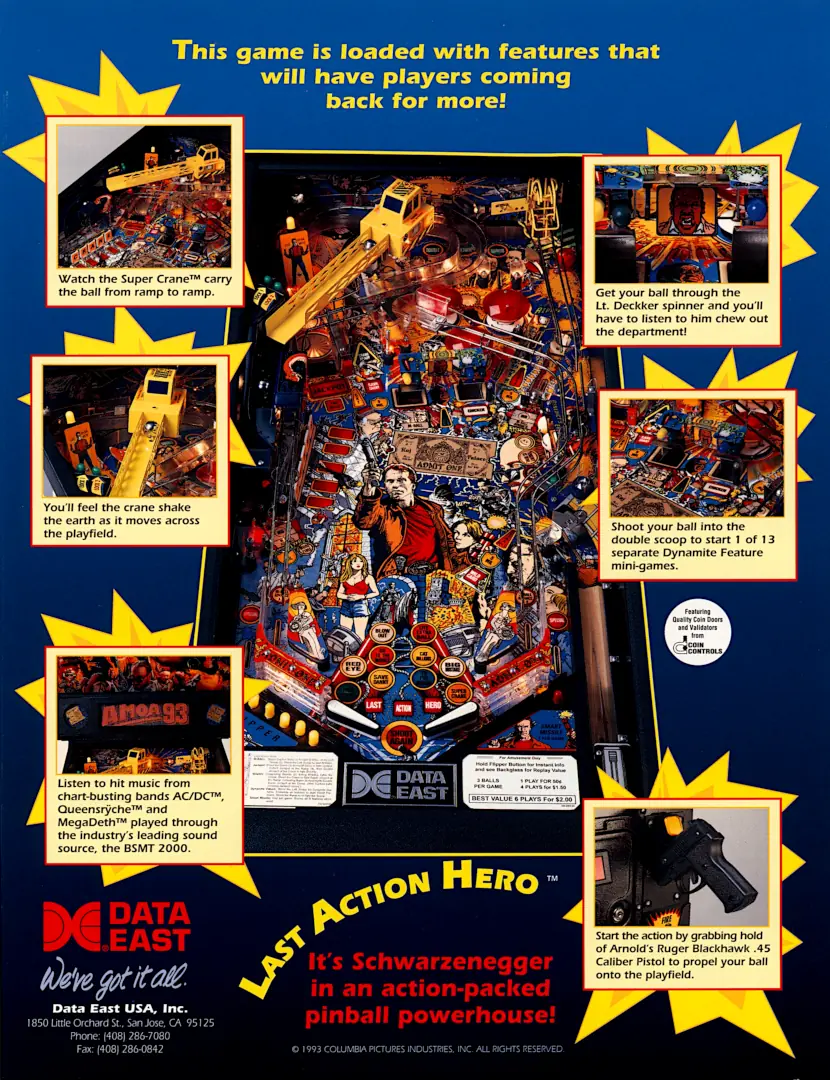
With a shaker motor, a flashy topper, and a fully functioning crane on the playfield, this was easily one of Data East’s most expensive builds.
The 6-ball multiball, three magnets, and numerous modes create a chaotic, fast-paced game. But every point must be earned. And the sheer number of modes you need to complete to reach the final battle adds a surprising amount of depth.
Meteor (1979)

Meteor - the movie: all talk, no impact
Disaster movies were big in the ’70s. Earthquake, The Towering Inferno, Airport: if the world wasn’t at least half destroyed, you simply weren’t trying. Then came Meteor: Sean Connery rocking a magnificent mustache, a giant space rock heading for Earth, and a diplomatic mission between the US and the Soviet Union. What could possibly go wrong? Well… everything.
Where other disaster films explode, Meteor somehow makes the end of the world mind-numbingly dull. The meteor looks like moldy bread, the special effects were outdated even back then, and most of the cast seem like they’re just waiting for their paycheck.
Critics in the ’70s didn’t hold back: slow, boring, endless nonsense dialogue, and barely any actual destruction. Not even Henry Fonda’s voice-over could save this rock from cinematic oblivion.
Meteor – the pinball machine (Stern, 1979)
Most players don’t realize this, but Meteor is officially based on the 1979 disaster flick. You wouldn’t know it: there’s no Connery, hardly any movie branding, and the sound effects have about as much to do with the film as an actual meteor has with good production design.
And thank God for that. Because where the movie is a slow chunk of space boredom, the pinball machine is an unexpected blast.
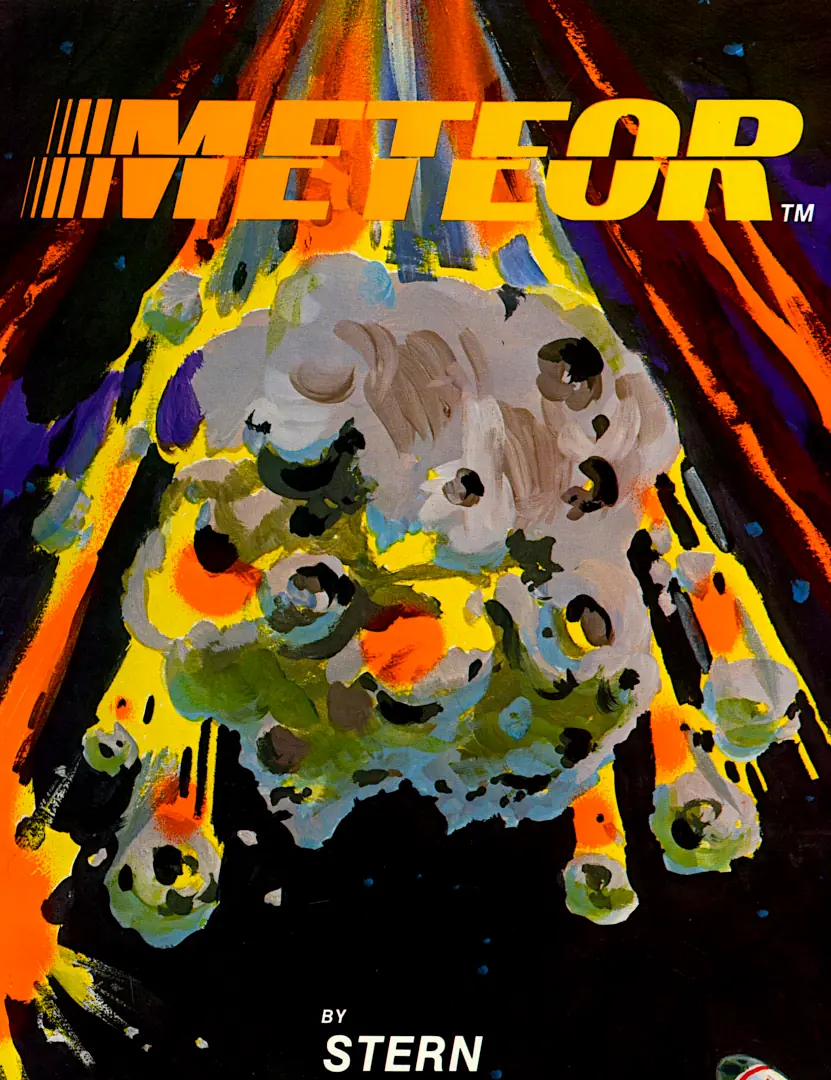
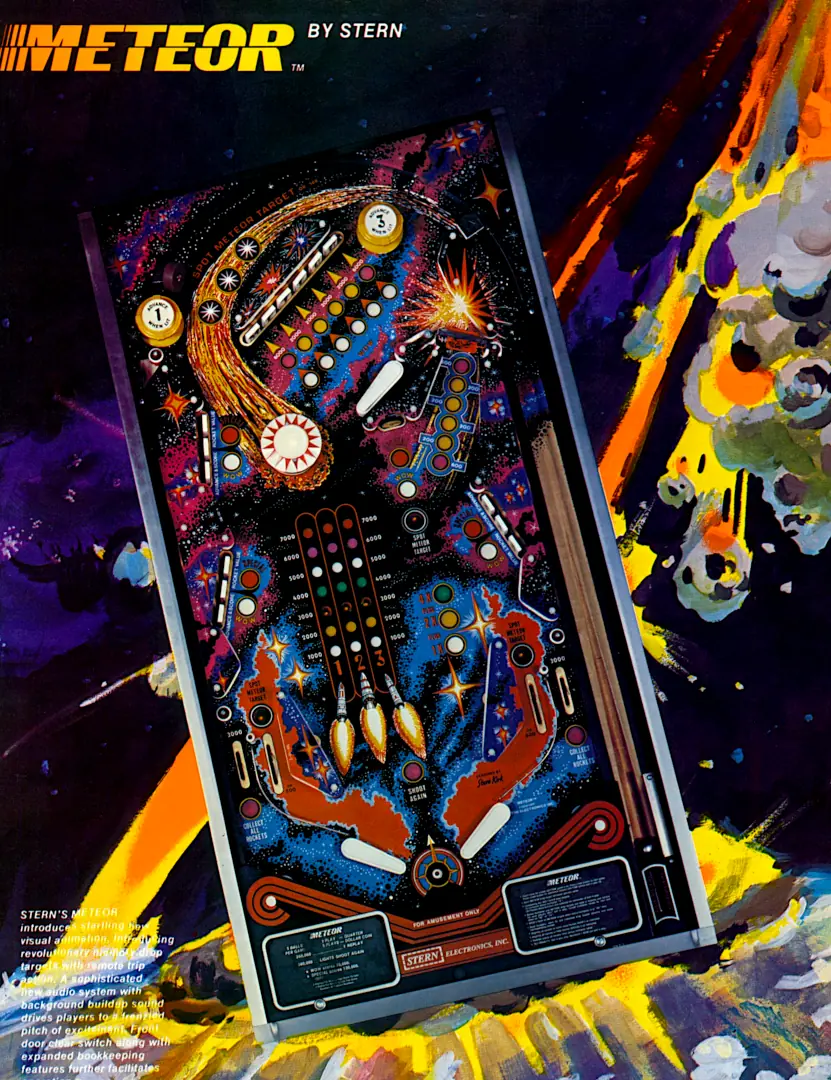
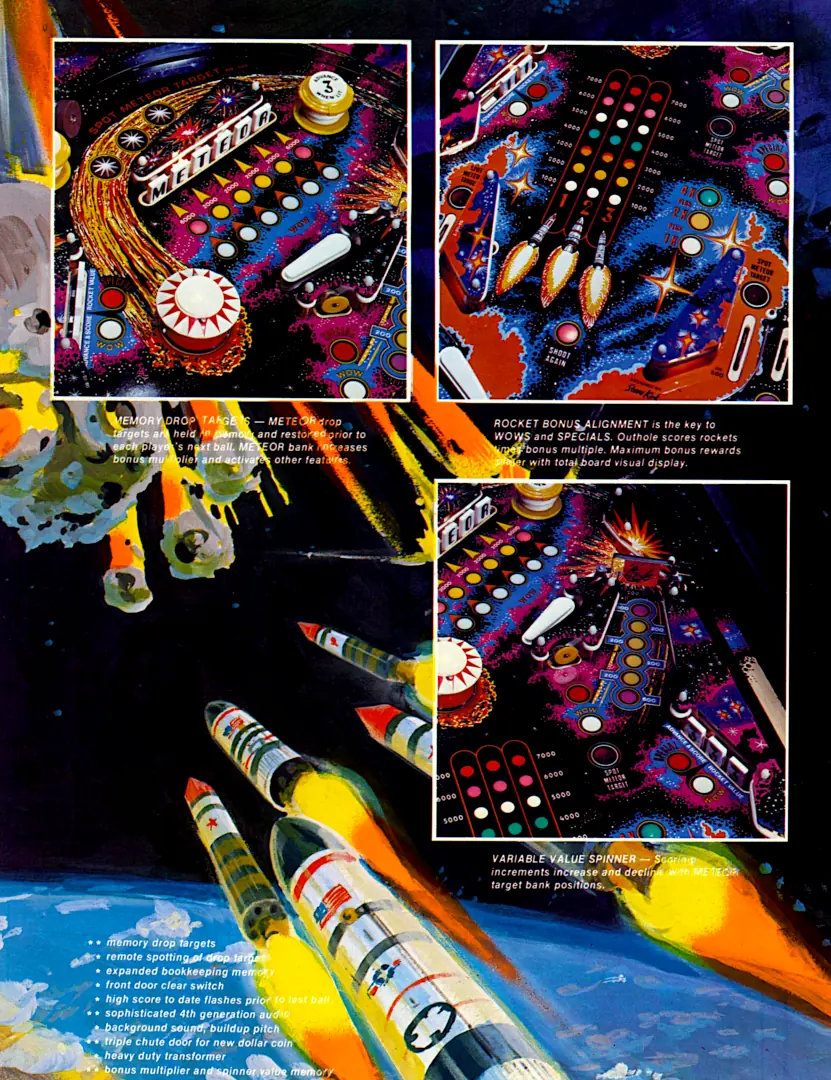
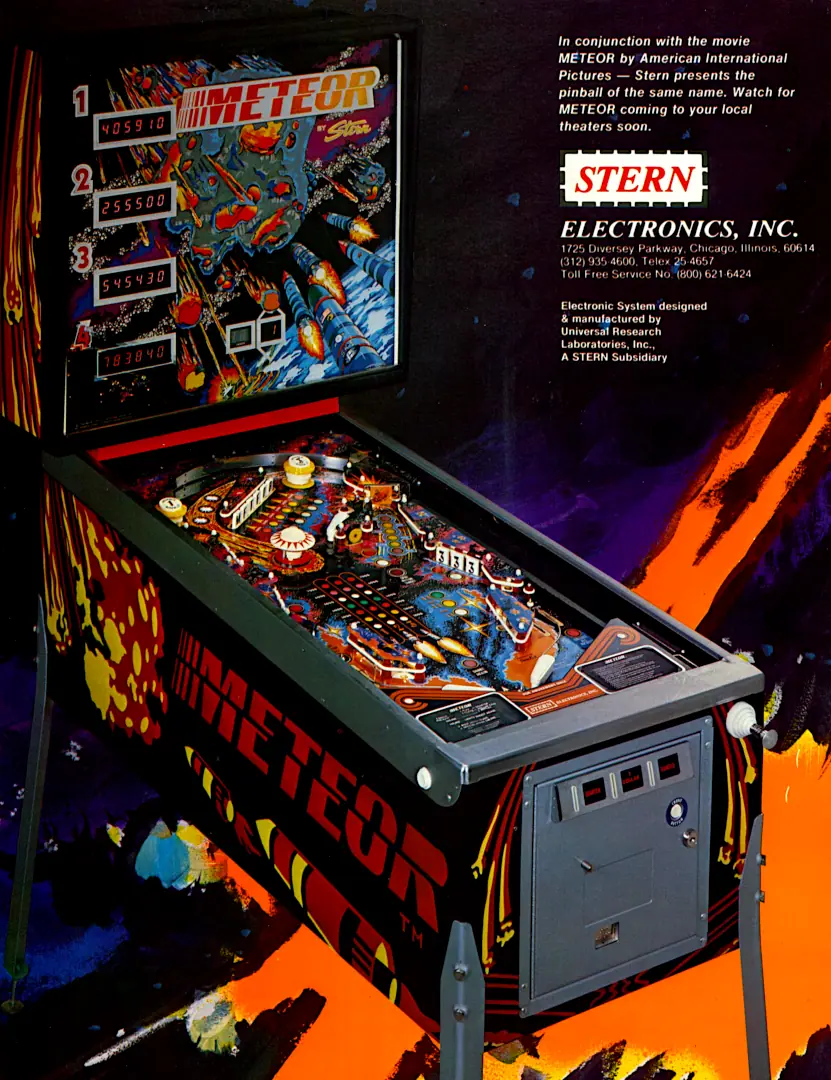
Classic Stern through and through: fast, direct, and gloriously spinner-heavy. Nailing that spinner just feels right, especially when you tie it into the clever bonus system and the drop targets. The rules are simple, but smart. That’s why Meteor works for both beginners and high-score chasers alike.
And that sound: raw, repetitive, twitchy. You’ll either hate it or fall under its spell.
No wonder this pinball classic is still high on many wishlists.
4. The Flintstones (1994)
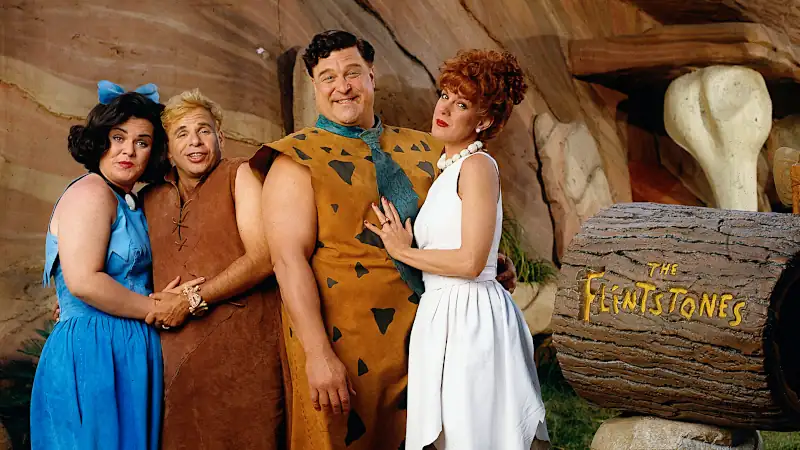
The Flintstones – the movie: prehistoric eye candy, Stone Age storytelling
How many sets, costumes, and special effects can you cram into one movie before the audience loses sight of the plot entirely? The Flintstones does its best to answer that question.
Bedrock looks fantastic, but the story is a mess. Grown-up themes like corruption, fraud, and pink slips are awkwardly mixed with goofy puns and talking dinosaurs. The result: too dull for adults, too convoluted for kids, and fun for pretty much no one.
John Goodman gives it his all, but he’s stuck in a script full of hollow rock puns. And then there’s Kyle MacLachlan. Once a mystery man in Twin Peaks, now a slick villain in animal hide. It’s a strange fit.
Critics said the film stayed true to the cartoon’s style, but forgot to be an actual fun movie. It’s a lot of noise in a beautifully crafted Stone Age world, with the emotional depth of a sculpted foam block.
The Flintstones – the pinball machine (Williams, 1994)
Where the film fails to entertain both kids and adults, the pinball machine has zero trouble. The Flintstones is instantly fun, accessible, and just plain cheerful.
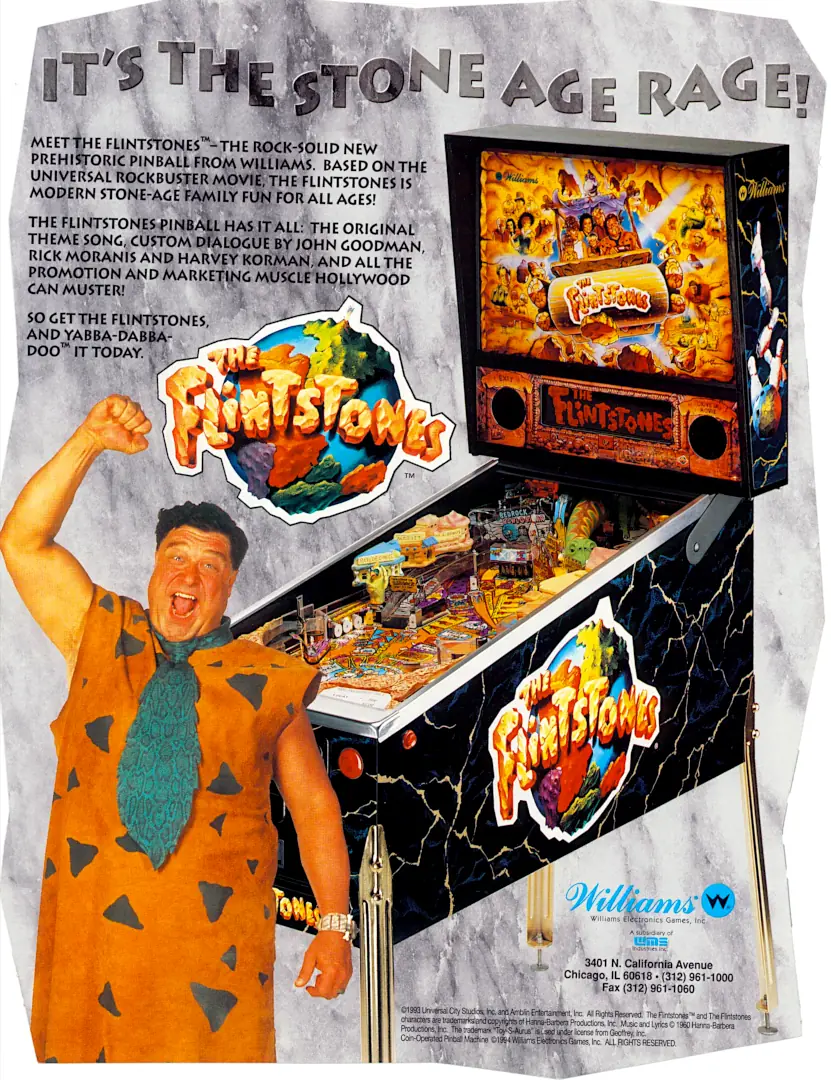
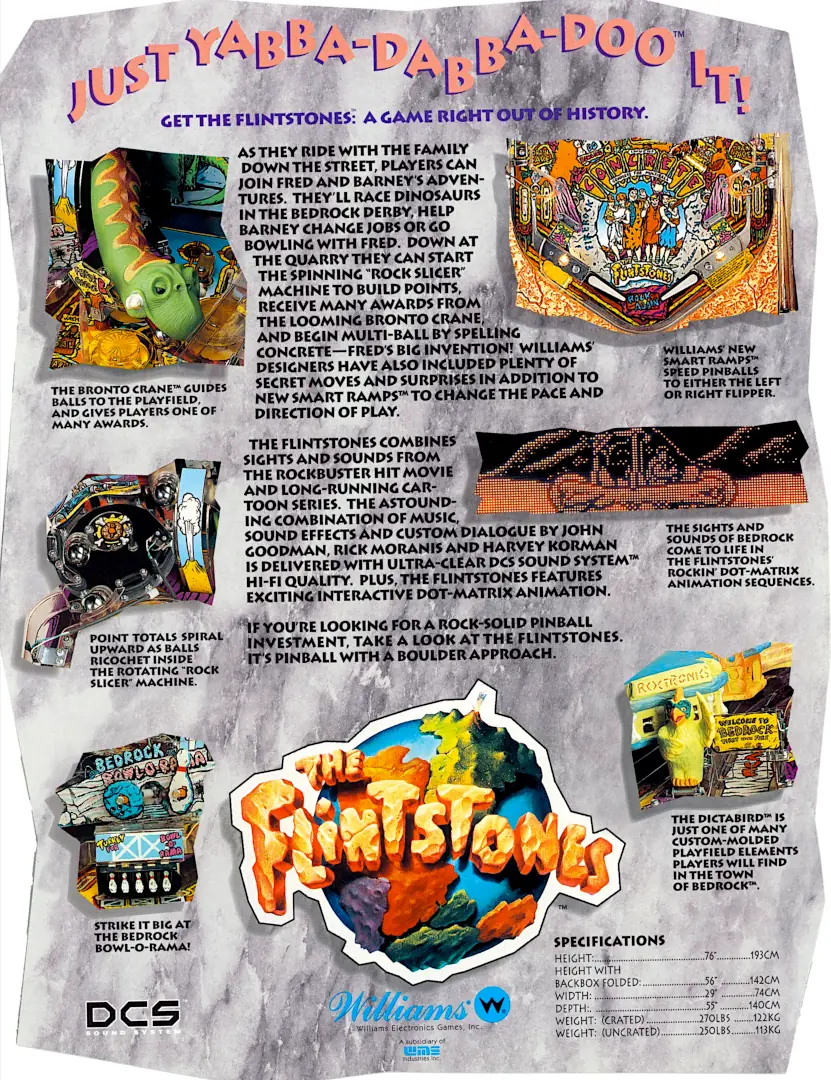
Bowling at the Bowl-O-Rama is delightfully dumb fun, the under-flipper ramp adds some flair, and starting a mode is as easy as 1-2-3. With the original voice work from John Goodman and Rick Moranis, Bedrock truly comes to life.
That said, it’s not all Yabba-Dabba-Doo. There are only four modes, and the Wizard Mode is pretty bland. Serious players might find the game a bit shallow. But honestly? You’ll forgive it quickly.
Because if The Flintstones pinball machine gets one thing right, it’s this: it’s just plain fun. For everyone.
5. Lost in Space (1998)
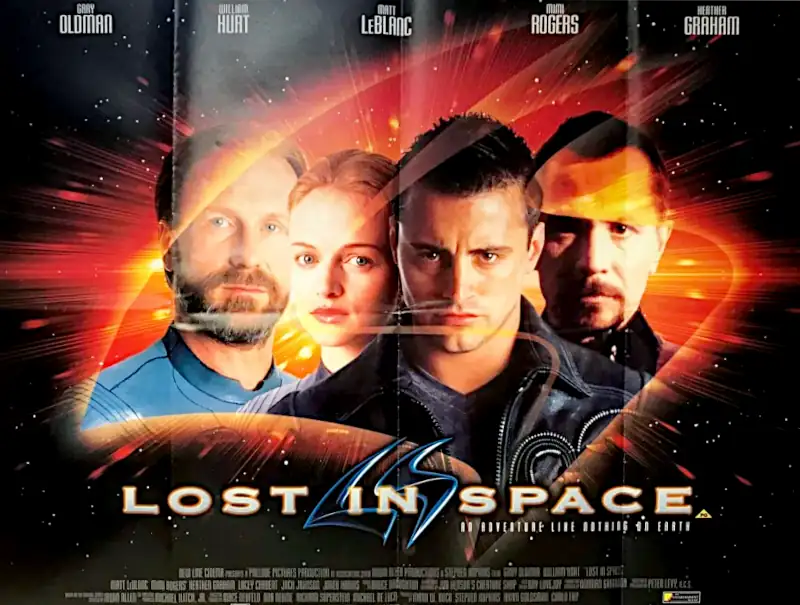
Lost in Space – the movie: lost in its own chaos
You’d think that with Gary Oldman, William Hurt, and Matt LeBlanc on board, something decent might come out of it. But no. Lost in Space feels like a spaceship with no course. The film swings from family drama to time-travel confusion to generic action scenes, without ever giving you a reason to care.
The charm of the original series? Gone without a trace. Replaced by grim faces, mediocre CGI, and a weird ape-like space creature that was probably meant to be comic relief. Spoiler: it wasn’t.
And Matt LeBlanc? Riding high on his Friends fame, but not even his sitcom charisma could rescue this mission. Think “Joey in Space,” hitting on the captain’s daughter with cringe-worthy lines that land with more shame than chemistry.
Sure, it opened at number 1 in the US box office, but only because Titanic finally sank after 15 weeks. Not long after, Lost in Space was buried under bad reviews and quietly vanished. Lost space, lost time.
Lost in Space – the pinball machine (Sega, 1998)
Like the film, the Lost in Space pinball machine isn’t exactly groundbreaking. Its main gimmick, a multiball release on a spinning disc with a magnet in the middle, looks fantastic, but was lifted straight from Twister (1996).
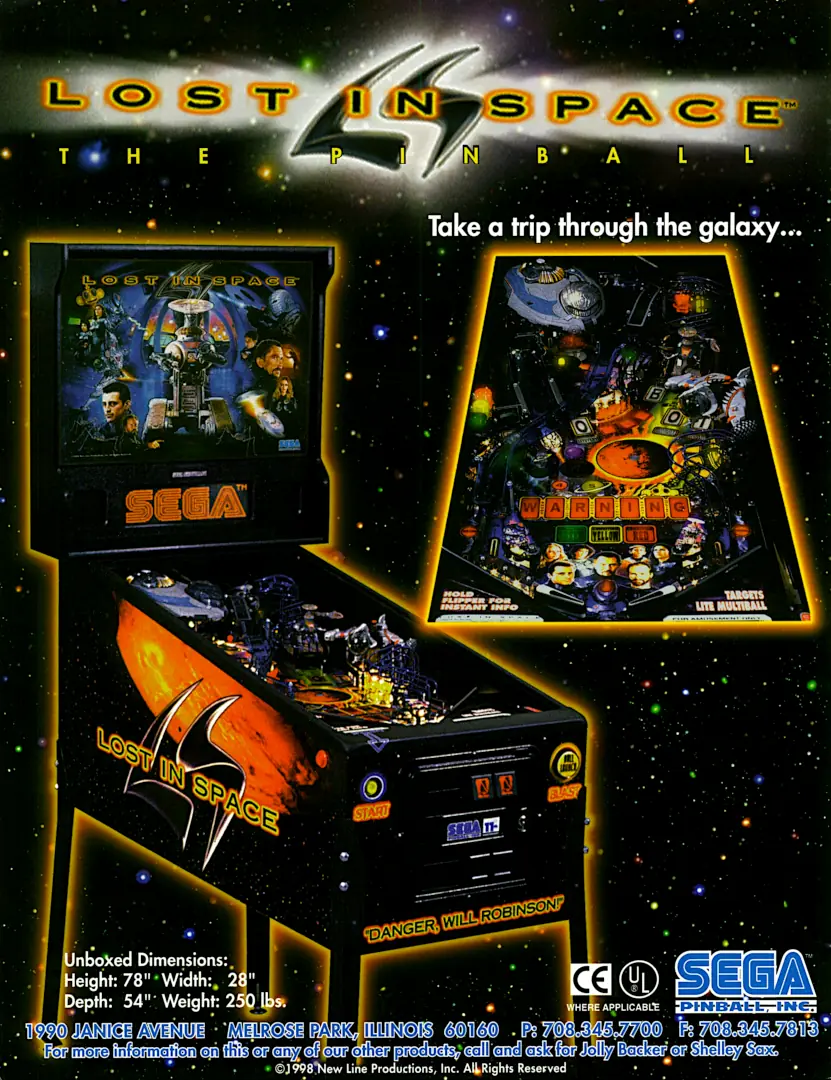
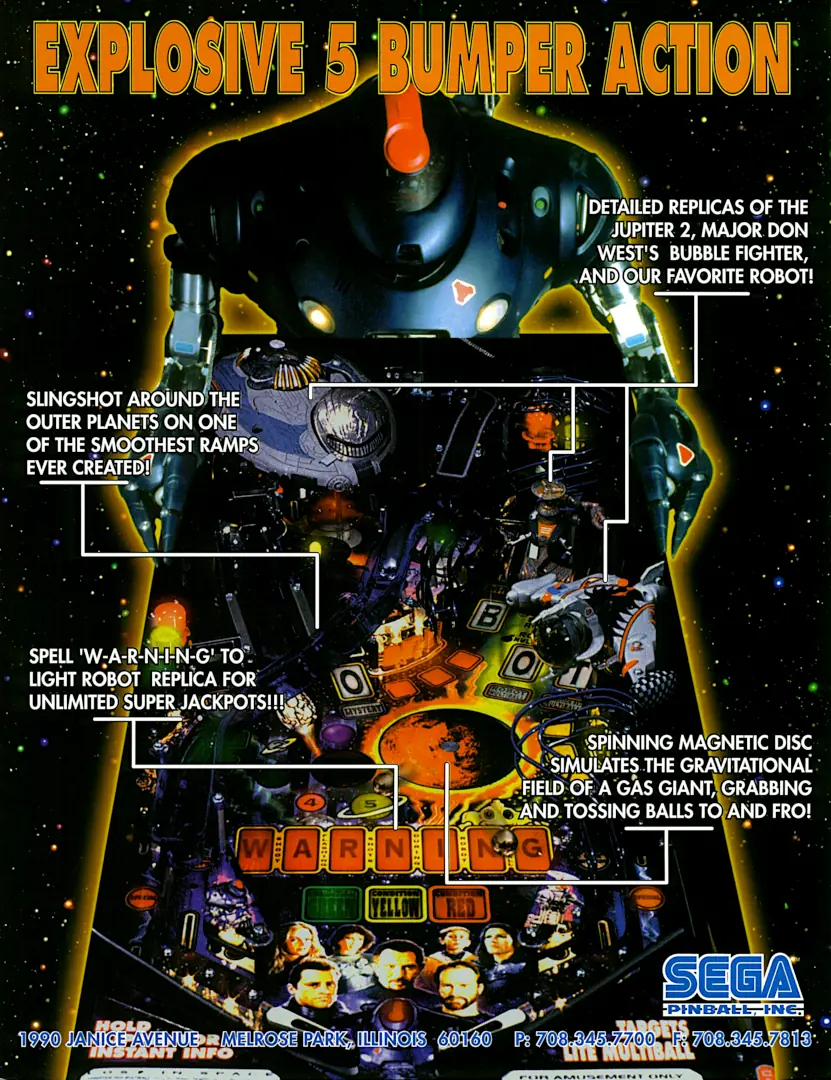
Still, when dialed in properly, Lost in Space is a fun machine. Big effects, lots of multiball, plenty of jackpots, and, best of all, very little thinking required.
Also: if you ever spot one in the wild, count yourself lucky. Sega only made 600 units. So if you see one, play it.
6. Johnny Mnemonic (1995)
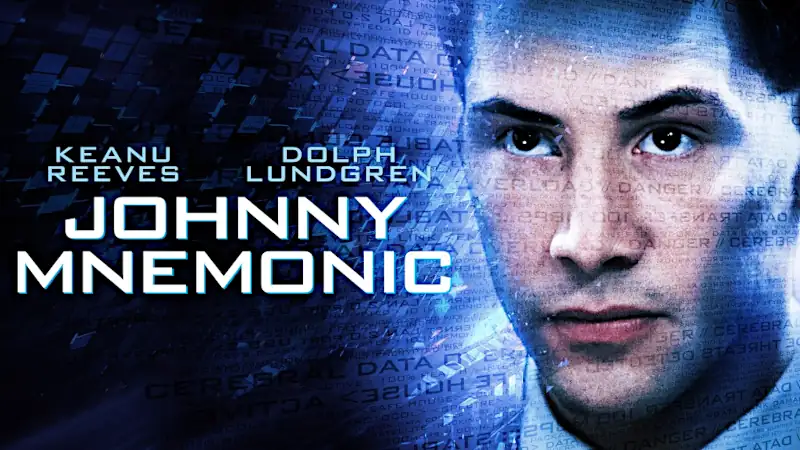
Johnny Mnemonic – the movie: stiff acting in a scrambled cyberpunk mess
The tagline “Meet the Ultimate Hard Drive” was uninspired to begin with. And when you realize that this “Ultimate Hard Drive,” played by Keanu pre-Matrix Reeves, holds just 320 gigabytes… you know this film hasn’t aged well.
Some films survive the test of time with charm. Johnny Mnemonic doesn’t. Reeves is wooden and flat, the plot is weak, and the whole thing is chaotic and confusing. It’s often painful to watch, and in every way eclipsed by his later masterpiece, The Matrix.
Johnny Mnemonic – the pinball machine (Williams, 1995)
Now this is a whole different story. Johnny Mnemonic might just be the fastest pinball machine of the 90s. It’s got flow for days, tight rules, and a seriously satisfying endgame.
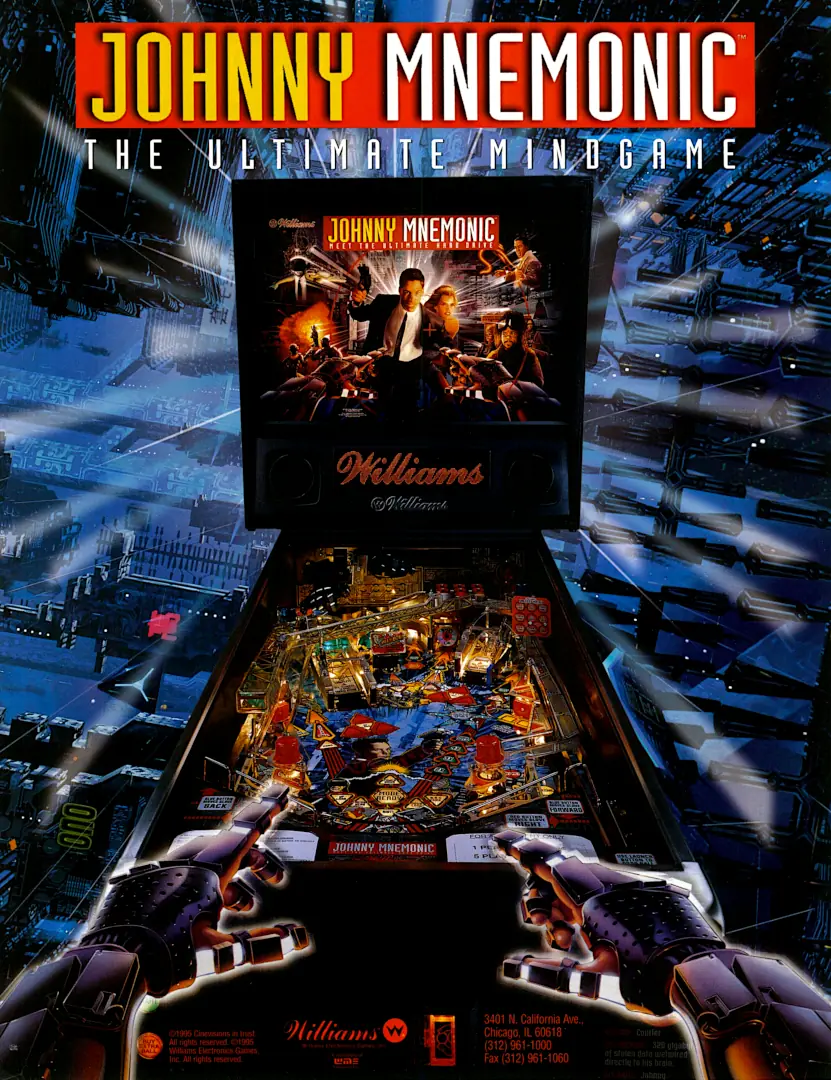
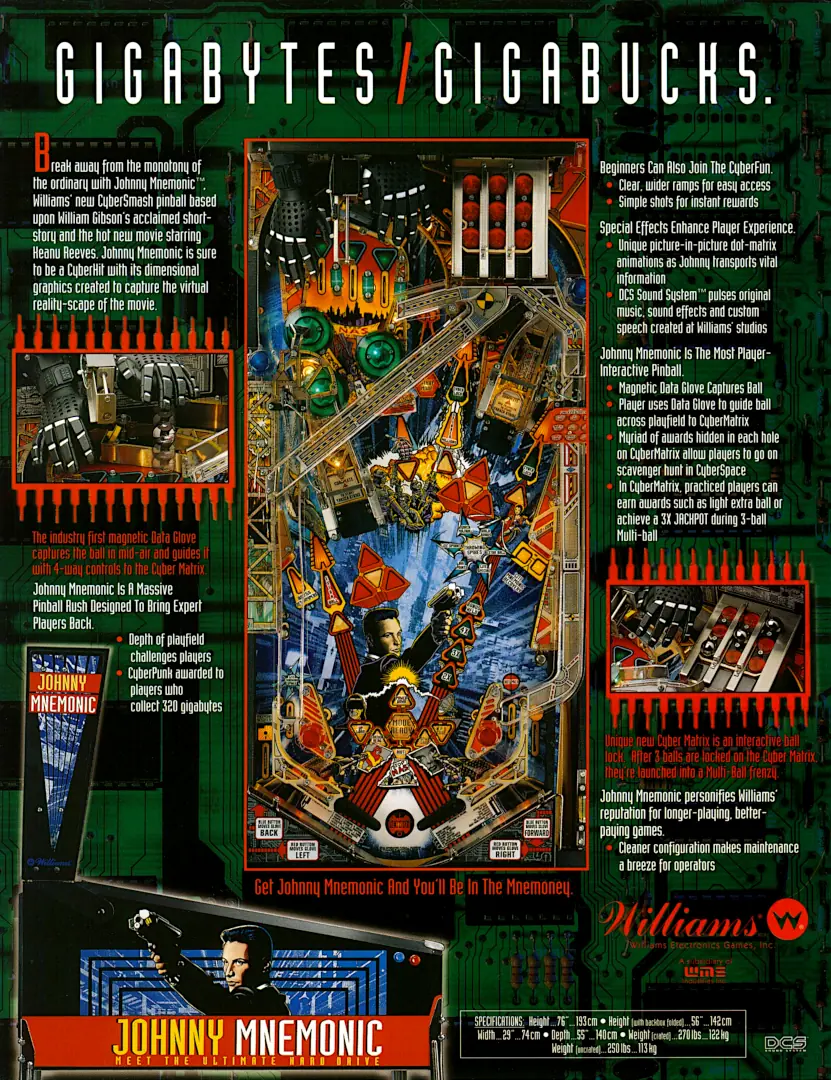
Its centerpiece? A full-on Matrix-style glove-controlled ball lock system. You use actual “cybergloves” to lock your shots. It’s like Williams had a glimpse of the future.
It’s no surprise that long-time fans Dennis van de Pas, Gerard van de Sande and Sascha Voskuil took this brilliant layout and re-themed it into a custom The Matrix machine years later.
They kept the original playfield but overhauled the artwork, sounds, and code to bring it fully into Neo’s world. Only a handful of these top-tier homebrew machines exist, and they’re legendary.
Barb Wire (1996)
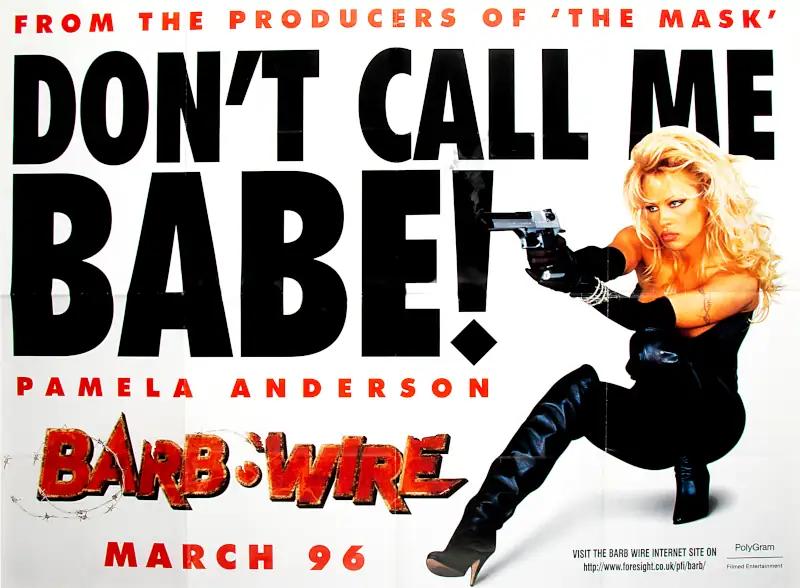
Barb Wire – the movie: Casablanca with cleavage
Picture this: it’s 2017. America is caught in a second civil war. So far, plausible.
Enter Pamela Anderson as a leather-clad bounty hunter. And this version of 2017? It feels like it was directed by a teenage boy with a thing for explosions.
Barb Wire tries to mix sci-fi, noir, and comic-book aesthetics, but forgets to include a plot, logic, or competent acting.
The film leans hard on Pam’s Baywatch fame, but behind all the corsets lies a jumbled mix of flat dialogue, incomprehensible motivations, and over-the-top action that never actually gets exciting.
Still, Barb Wire has something oddly fascinating. Believe it or not, it’s a loose retelling of Casablanca. Only with motorcycles, guns, and bondage gear.
Critics were merciless (“boring,” “consistently incompetent,” “all style, no substance”), and yet the film managed to gain cult status. And let’s be honest: if you’re hosting a Bad Movie Night, Barb Wire is weirdly entertaining. But still absolutely terrible.
Barb Wire – the pinball machine (Gottlieb, 1996)
Let’s be clear: Barb Wire the pinball machine is no Johnny Mnemonic. But taken for what it is, it’s a fast, surprisingly enjoyable game: way more fun than the movie would suggest.

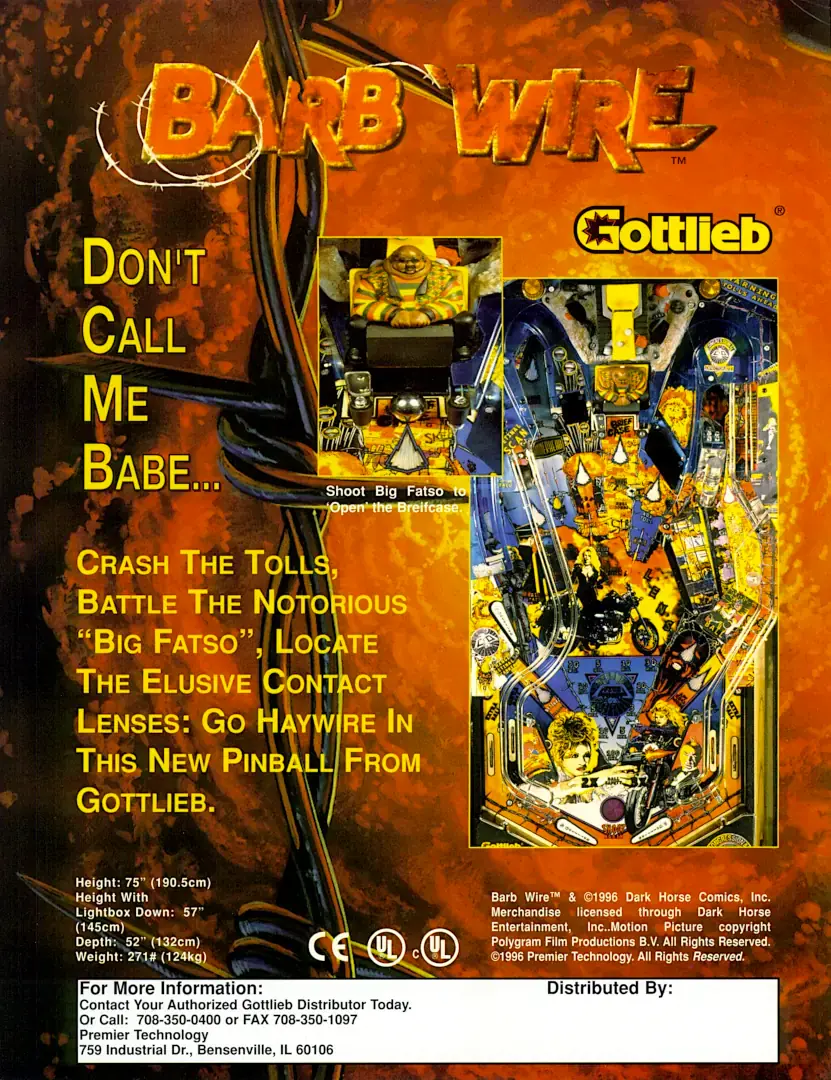
The ramps have great flow, the modes are varied, and there’s enough going on to keep even seasoned players entertained. With the Haywire wizard mode and multiple multiballs, there’s plenty to shoot for. And credit where it’s due: for a B-movie pin starring Pamela Anderson on a Harley, the theme integration is surprisingly well done.
Like many Gottliebs, though, the rules are a bit shallow and rough around the edges. Not a masterpiece, but definitely underrated, and genuinely fun to play. And that’s what this article is all about.
Fun fact: Barb Wire was Gottlieb’s final pinball release. Its original flipper setup is long and clunky: classic Gottlieb. But swap in longer System 80 coil stops and it transforms. Crisp, snappy, responsive flippers, just like you’d expect from modern machines.
8. Batman Forever (1995)
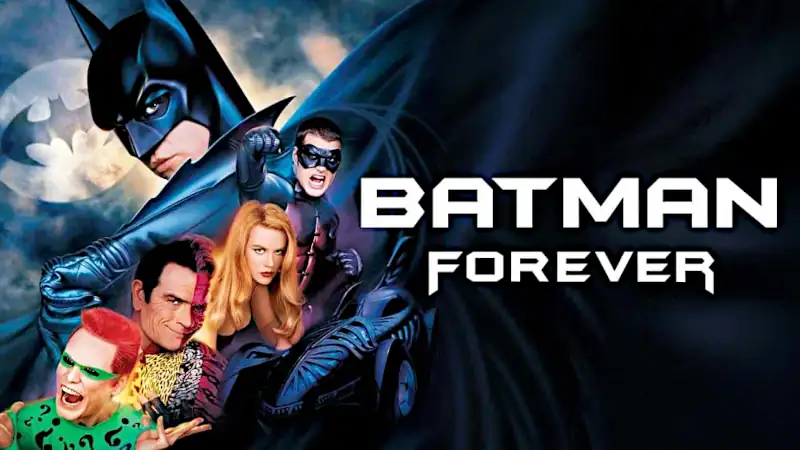
Batman Forever – the movie: neon with no soul
After Tim Burton’s dark and brooding Gotham, Joel Schumacher decided to turn on the lights. All of them. Batman Forever is a chaotic explosion of neon, plastic muscles, and overacting that would make even the Joker blush.
Jim Carrey bounces through the film like some deranged mix of Ace Ventura and Willy Wonka, while Tommy Lee Jones as Two-Face mostly seems to be fighting his own script. He and Carrey definitely weren’t besties. And Val Kilmer? He plays Batman like he’s not sure if he’s the Caped Crusader or a wax figure of himself. The story? Secondary. The tone? All over the place.
And yet… Batman Forever isn’t nearly as catastrophic as the trainwreck that was Batman & Robin a few years later. There are bright spots. Elliot Goldenthal’s score is surprisingly good, the Gotham sets are visually stunning, and Nicole Kidman pretty much steals every scene she’s in.
Still, this is a movie with little redeeming value. Let’s face it: Bats have always performed best in the dark.
Batman Forever – the pinball machine (Sega, 1995)
Sega’s Batman Forever was their loud and flashy answer to Bally/Williams’ Superpins: a wide-body machine packed with gadgets, lights, and spectacle. The neon-green wireform ramps are showstoppers, especially when you swap in cold white LED lights. Then the playfield glows like the Batcave is throwing a full moon rave. Add the atmospheric backglass and oversized display, and the vibe is complete.
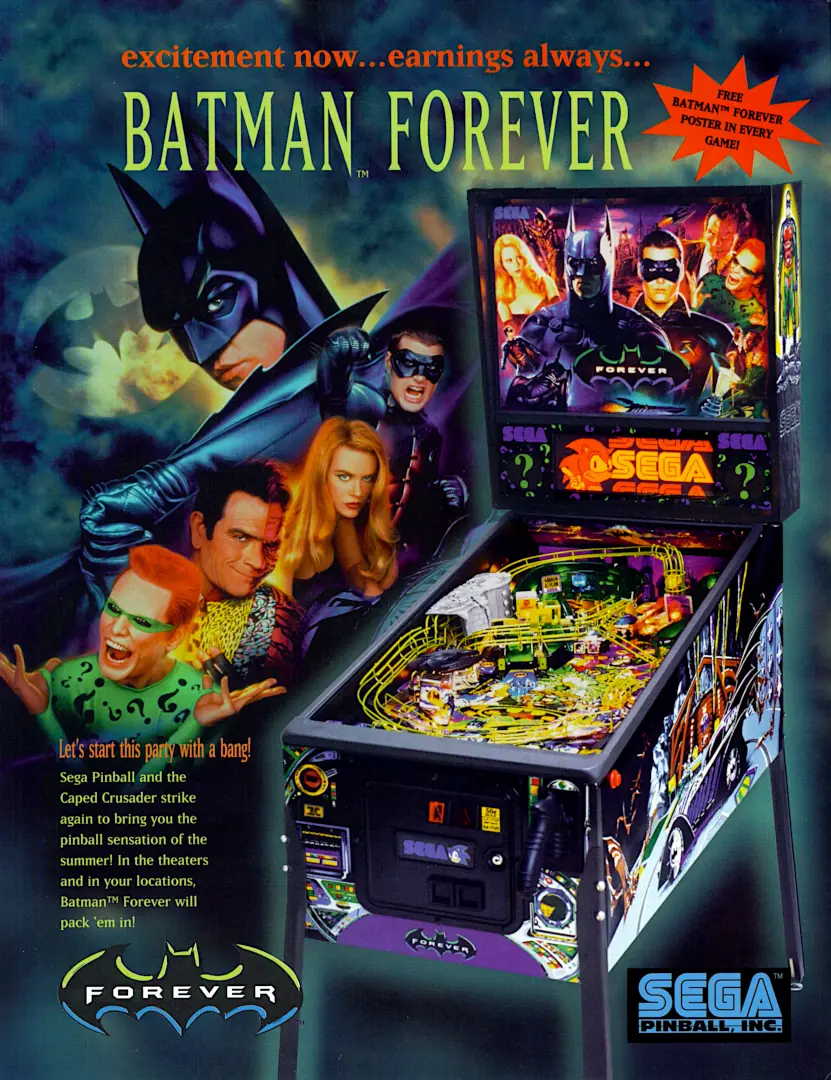
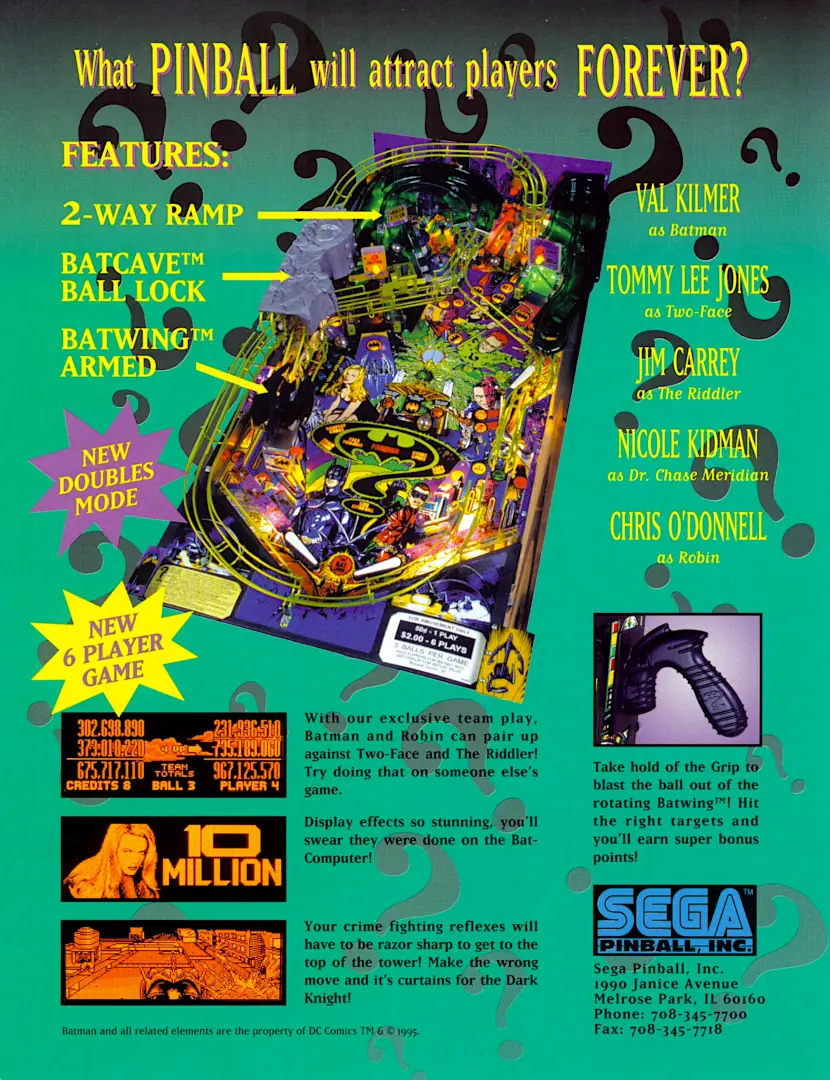
Layout-wise, Batman Forever is basically Star Trek with a cape: two of the three ramps are straight-up copies from Star Trek: The Next Generation. Even the Batwing cannon is just a reskinned probe launcher. But hey, if it works…
The flow is great, the cannon is satisfying to shoot, and the Batcave lock gives you a moment to breathe mid-game.
A true classic? Not quite. The modes could be deeper, and the sound, like many Sega titles, isn’t exactly audiophile material. But give Batman Forever the right LEDs and some TLC, and you’ve got a loud, flashy, seriously fun machine. Just like the movie: trying a bit too hard, but delivering a good ride anyway.
9. The Shadow (1994)
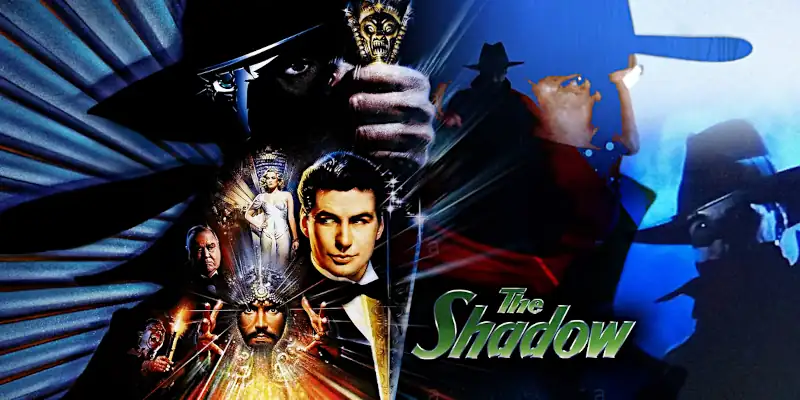
The Shadow – the movie: a film cursed by bad luck
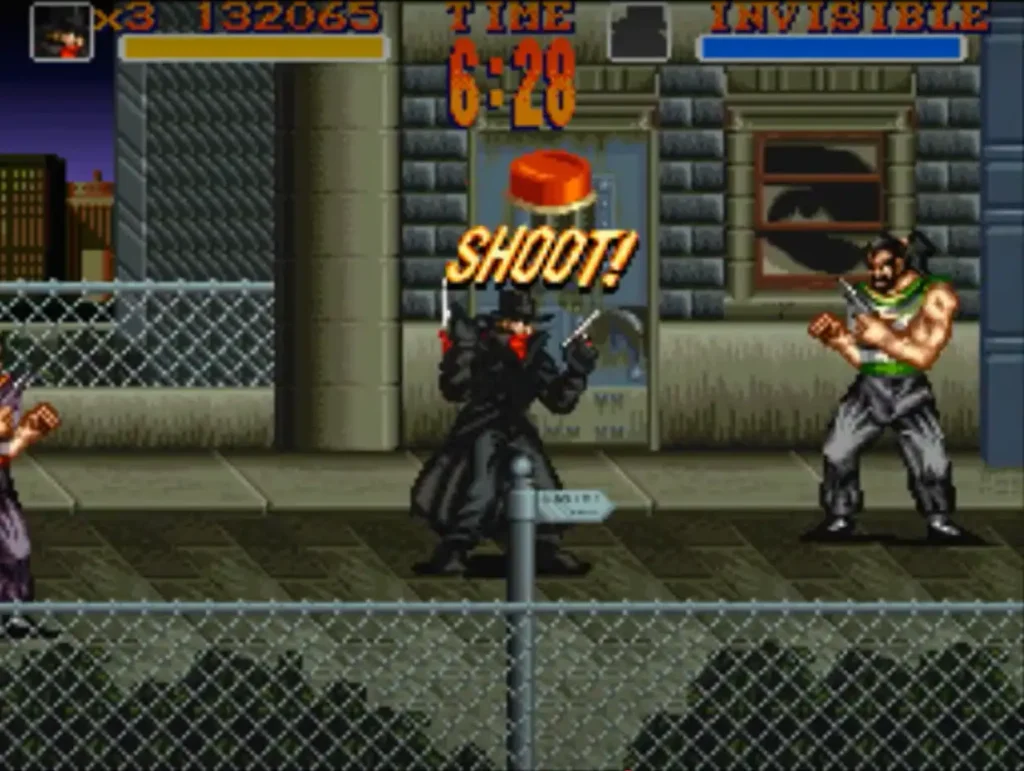
Looking at all the merchandise that launched in 1994, it’s clear the makers of The Shadow had high expectations. Action figures, knives, limited-edition busts, even a full-on video game for the Super Nintendo and Sega Mega Drive: they went all-in.
But fate had other plans. Production was hit with setback after setback. Most notably: an earthquake that completely destroyed the set for the film’s climax. And you can tell. That final act falls painfully flat.
At the box office, The Shadow had to go up against The Lion King, Forrest Gump, and The Mask. It never stood a chance. The movie flopped. The video game? Cancelled altogether.
Still, The Shadow is one of my guilty pleasures. Not because it’s a great film: it isn’t. But that 1930s atmosphere? Irresistible. Gorgeous art deco sets, a moody score… I’m a sucker for it.
And most of all: watching the film gives you new appreciation for the pinball machine. The designers took everything good from the movie, and made it better.
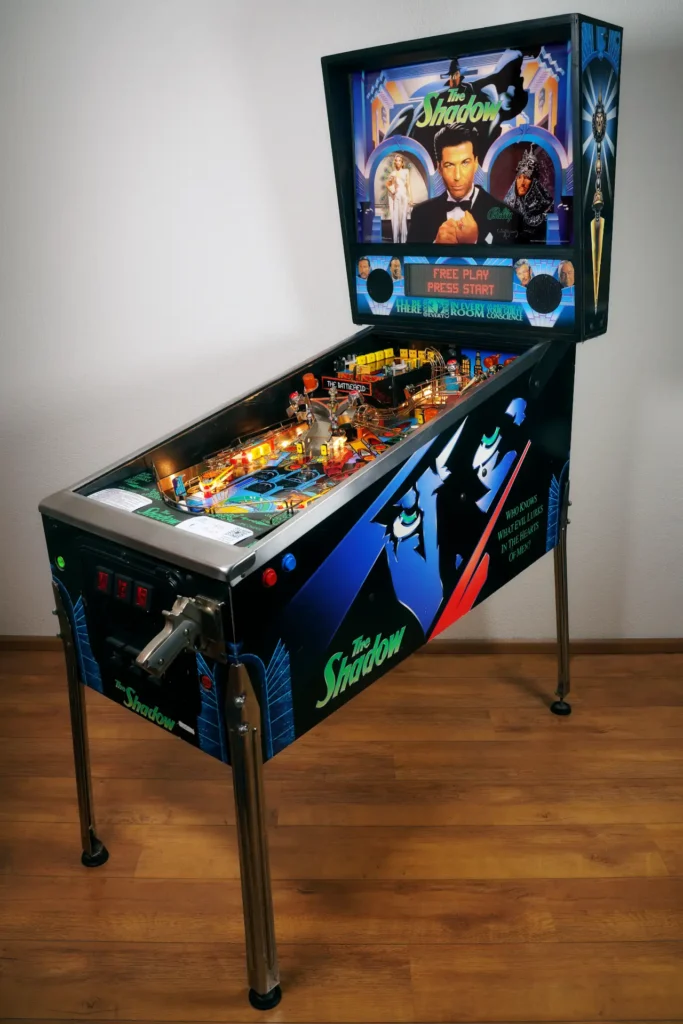
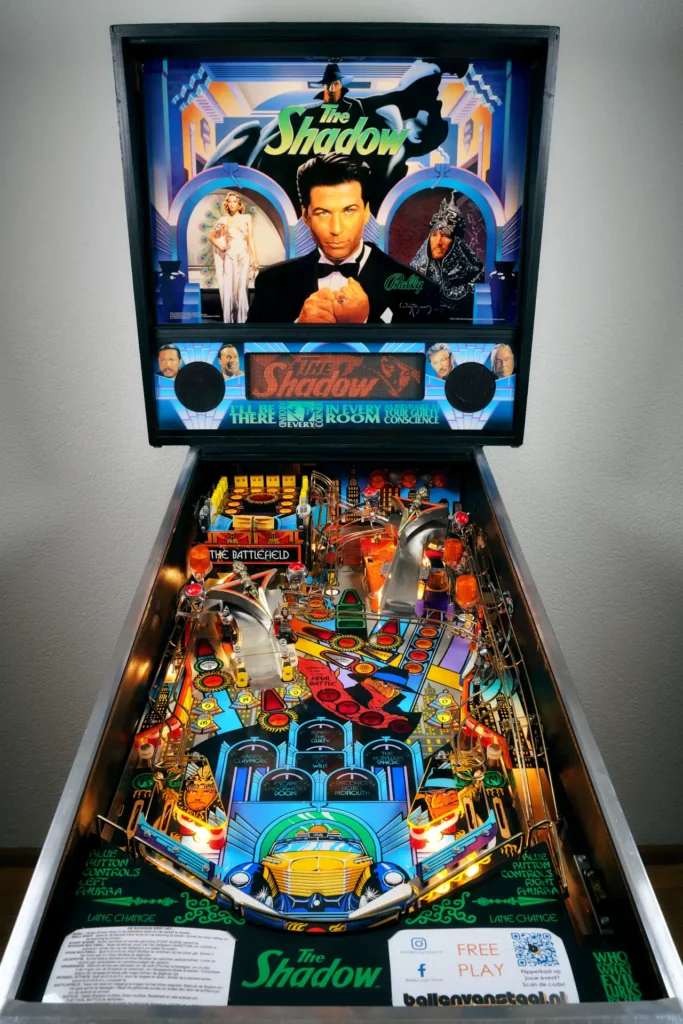
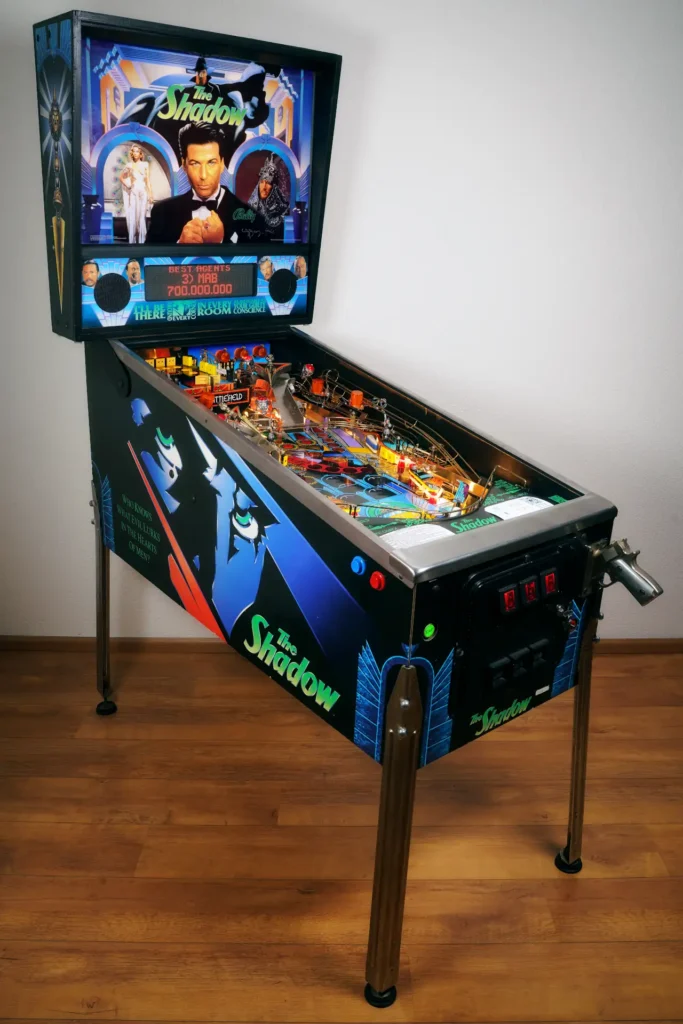
The Shadow – the pinball machine (Bally, 1994)
This, right here, is the best piece of Shadow merchandise ever made. Especially if you’ve just seen the film, this game is a blast to play.


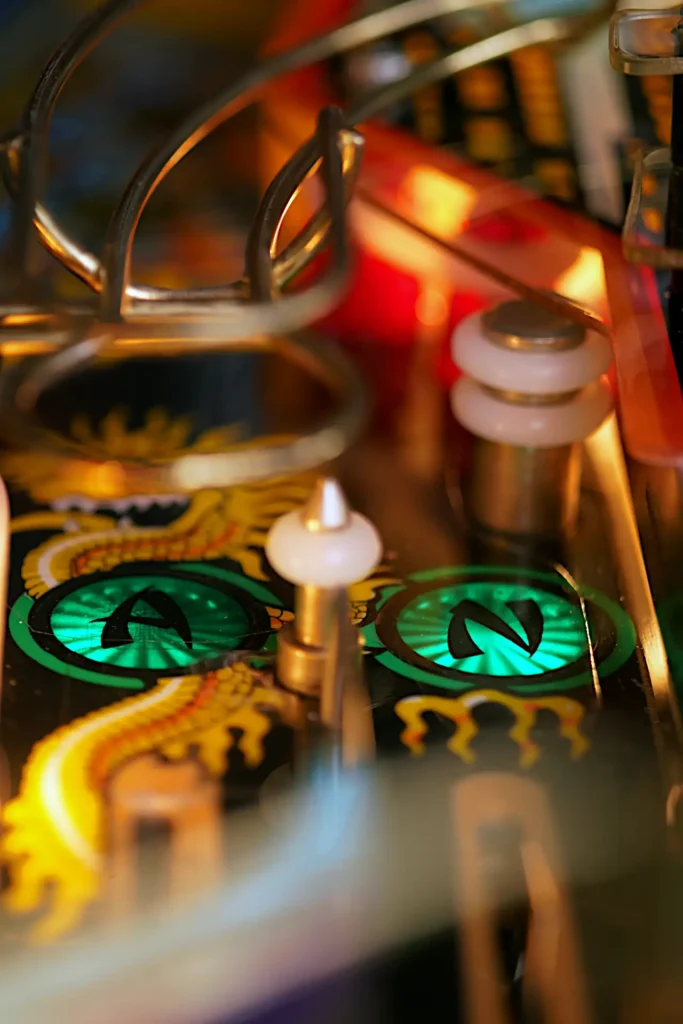
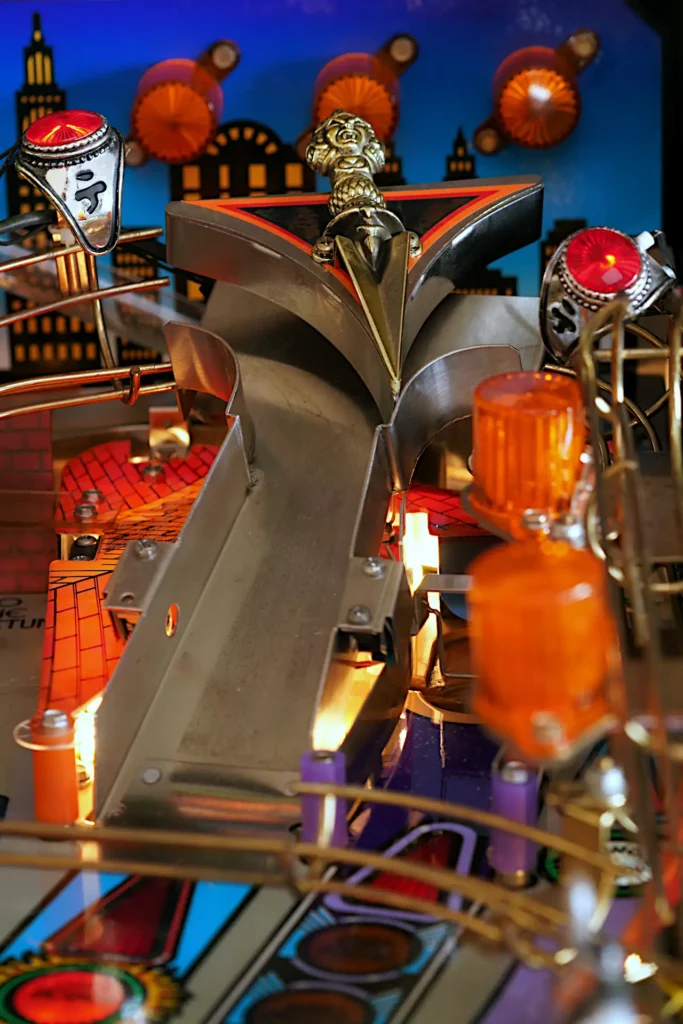
From the Phurba daggers and the Sanctum ball lock to the Battlefield mini-playfield and movie scene recreations, everything is lovingly built into the machine. The level of craftsmanship is rare. Rivaled, in my opinion, only by Indiana Jones (1993).
And truth be told? The Shadow plays even better than Indy. The flow is phenomenal. With its player-controlled diverters, it gives you a level of interaction with the ball that’s just wild.
Make no mistake: this game is tough. But when you finish the Final Battle and slam that glass shard between Khan’s eyes, you feel it in your bones.
Easily one of the most intense rushes in all of pinball.